


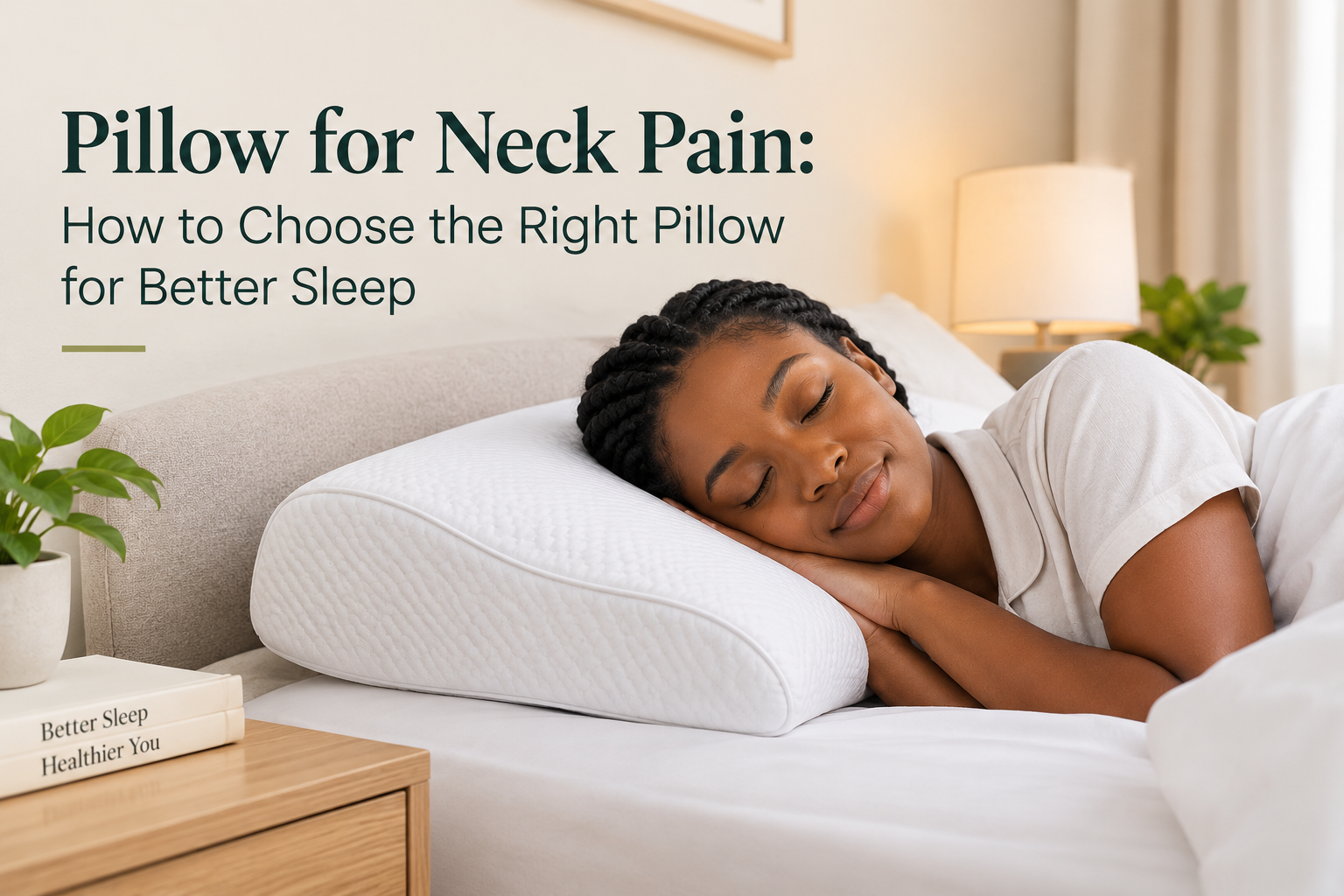
If you wake up with a stiff neck, your pillow is one of the first things to check. The right pillow for neck pain keeps your head and neck in line with your spine all night. The wrong one leaves your neck bent for six to eight hours.
This guide explains what to look for, how your sleeping position changes the answer, and which Esorae Home pillows suit each type of sleeper.
What Is the Best Pillow for Neck Pain?
The best pillow for neck pain keeps your head and neck level with your spine. Side sleepers usually need a firmer, higher pillow (about 4–6 inches), back sleepers a lower one (about 3–5 inches), and stomach sleepers a very thin pillow or a change of position. For most people, a contoured memory foam pillow is a strong starting point.
Height guidance of 4–6 inches for side sleepers and 3–5 inches for back sleepers is a common orthopaedic rule of thumb. The right number for you also depends on your shoulder width and mattress firmness, so treat it as a starting range. cfaortho
Why Does Your Pillow Cause Neck Pain?
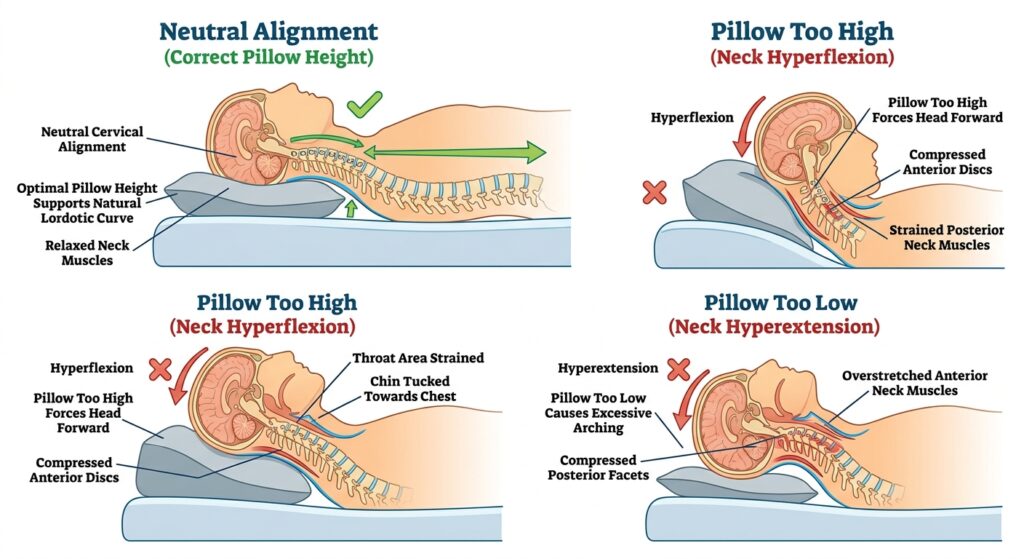
Your neck (the cervical spine) has a natural curve. A pillow that is too high pushes your chin toward your chest. One that is too flat lets your head drop back or sideways. Either way, the muscles around your neck and shoulders work all night instead of resting.
That is why neck pain and shoulder pain often show up together. You wake up with stiffness, a dull ache, or discomfort that spreads into your upper back.
Signs your pillow may be the problem:
- Neck stiffness that is worst in the morning and eases through the day
- Pain that improves when you sleep somewhere else
- A pillow that is flat, lumpy, or that you keep folding or stacking
- Shoulder or upper back discomfort when you wake up
If you have numbness, tingling in the arms, pain after an injury, or pain that lasts more than a couple of weeks, see a doctor. A pillow can support recovery, but it is not a diagnosis.
How Do You Choose a Pillow for Neck Pain?
Choose by four things, in this order: sleeping position, height (loft), firmness, and material.
1. Sleeping position
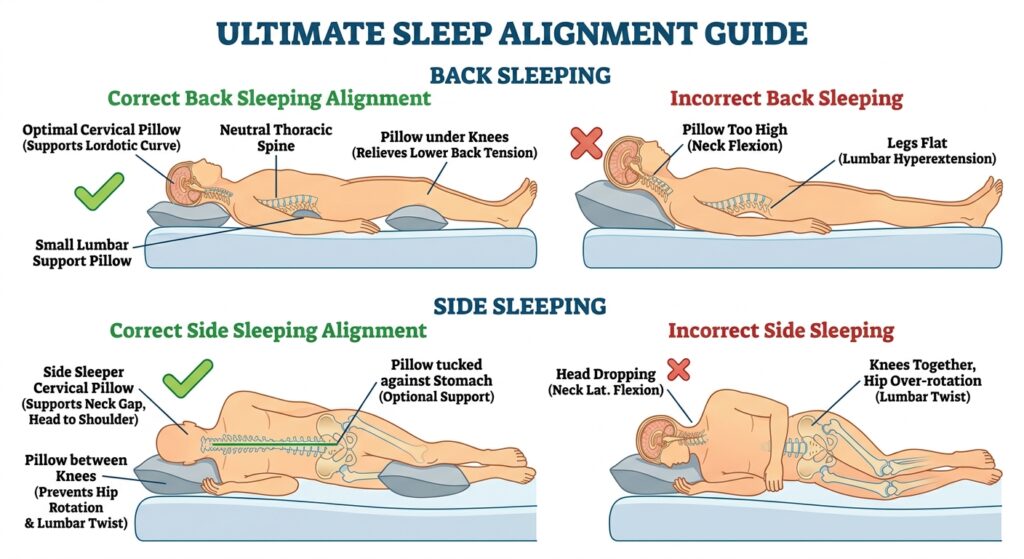
- Side sleepers need a pillow thick enough to fill the gap between the ear and the shoulder.
- Back sleepers need a lower pillow that supports the curve of the neck without pushing the head forward.
- Stomach sleepers put the most strain on the neck. Both Sleep Foundation and Cleveland Clinic reportedly rate stomach sleeping as the worst position for neck pain. If you cannot change, use the thinnest, softest pillow you can. circadianrest
2. Height (loft)
Your neck should sit roughly parallel to the mattress, not tilted up or down. Neutral alignment means the neck follows the gentle curve of the spine without excessive arching or flattening. cfaortho
3. Firmness
Medium to medium-firm suits most people with neck pain. Too soft and your head sinks. Too hard and pressure builds at the neck and shoulder.
4. Material
| Material | Best for | Watch out for |
|---|---|---|
| Memory foam | Pressure relief, contouring to the neck | Can feel warm unless it is open-cell or ventilated |
| Latex | Bounce and firm support | Can feel too firm for some |
| Microfibre / down alternative | Soft, plush feel | Compresses and shifts, so less consistent alignment |
| Feather | Luxury softness | Shifts under the head, so less reliable for neck support |
What Is a Cervical Pillow and Does It Work?
A cervical pillow is a contoured orthopedic pillow with a raised edge that supports the neck’s natural curve and a shallower centre that cradles the head. It is designed to encourage neutral alignment, mainly for side and back sleepers. Forbes
For most people with neck pain, a cervical pillow is the most direct fix. It will not cure an underlying condition. It just stops the pillow from making things worse.
Best Pillow for Neck Pain by Sleeping Position
Best pillow for neck pain for side sleepers
Side sleepers need height and firmness. A contour pillow with a higher edge fills the gap between shoulder and head, which also helps with neck and shoulder pain together.
Esorae pick: the Cervical Contour Memory Pillow. It has a curved shape that cradles the head, neck and shoulders, with dual-layer memory foam for medium support. The open-cell foam is designed for airflow, which matters in Nigerian heat.
Best pillow for neck pain for back sleepers
Back sleepers need moderate height and support under the neck curve. A medium-soft contour pillow works well.
Esorae pick: the Cloud Cervical Memory Pillow (₦45,000). It uses slow-rebound memory foam with a neck curve, a medium-soft feel and a removable, machine-washable cover.
Best pillow for neck pain for combination sleepers
If you shift between back and side through the night, a two-sided pillow helps.
Esorae picks:
- DreamLuxe Memory Pillow: one memory foam side for contoured support and one microfibre side for a softer feel.
- Duocomfort Dream Pillow: a detachable 2-in-1 design so you can adjust it to your preference.

Best budget pillow for neck support
The Spa Orthopedic Pillow has a medium fill, a neck guard design and a machine-washable cover. It is a good entry point if you want neck support without the memory foam price.
For a classic memory foam feel
The Memory Pillow is a standard memory foam pillow that contours to your head and neck. It is a good fit if you want the pressure relief without a heavily shaped contour.
Quick Comparison: Which Esorae Pillow for Neck Pain?
| Pillow | Best for | Feel |
|---|---|---|
| Cervical Contour Memory Pillow | Side and back sleepers | Medium, contoured |
| Cloud Cervical Memory Pillow | Back sleepers | Medium-soft, slow rebound |
| DreamLuxe Memory Pillow | Combination sleepers | Two-sided: foam and microfibre |
| Duocomfort Dream Pillow | Combination sleepers | Adjustable, detachable |
| Memory Pillow | Back and side sleepers | Classic memory foam |
| Spa Orthopedic Pillow | Budget neck support | Medium fill |
Is a Memory Foam Pillow Good for Neck Pain?
Yes, for most people. Memory foam contours to the shape of your head and neck, which spreads pressure and helps keep the neck supported. Its slow rebound also means it holds that shape through the night.
The main downside is heat. In warm climates, look for open-cell or ventilated designs and use a breathable pillowcase. If you sleep hot, this matters as much as firmness.
Common Mistakes When Choosing a Pillow for Neck Pain
- Buying the softest pillow. It feels good for five minutes, then lets your head sink.
- Stacking two pillows. This usually pushes the neck forward. Buy one pillow at the right height instead.
- Putting the pillow under your shoulders. The pillow should support the head and neck, not lift your shoulders.
- Keeping an old pillow. A pillow that has flattened or lumped no longer supports you.
- Ignoring the mattress. A very soft or sagging mattress changes how high your pillow needs to be. See our guide to the Esorae orthopaedic mattress if your bed is part of the problem.
How to Sleep With Neck Pain: 5 Quick Steps
- Sleep on your side or back where possible.
- Choose a pillow height that keeps your neck level with your spine.
- Side sleepers: put a pillow between your knees.
- Back sleepers: place a small pillow under your knees. This helps maintain the spine’s natural curve. cfaortho
- Give a new pillow one to two weeks. Memory foam takes time to feel right.
How Long Does a Neck Support Pillow Last?
Most memory foam pillows last roughly 2–3 years with care, but replace yours sooner if it stays flat, develops lumps, or your neck pain returns. A removable, washable cover and a pillow protector extend its life. Esorae’s pillow protector is available as a +₦10,500 add-on on selected pillow pages.
Conclusion: Choosing the Right Pillow for Neck Pain
The right pillow for neck pain matches your sleeping position, keeps your neck level with your spine, and feels supportive rather than just soft. Side sleepers should start with the Cervical Contour Memory Pillow, back sleepers with the Cloud Cervical Memory Pillow, and combination sleepers with the DreamLuxe or Duocomfort.
Ready to choose? Browse the full Esorae Home pillow collection or message the team on WhatsApp for help matching a pillow to your sleep position.

FAQ
1. Which pillow is best for neck pain?
A contoured memory foam pillow with medium firmness suits most people. Side sleepers need more height, and back sleepers need less. The Cervical Contour Memory Pillow is a good starting point for side and back sleepers.
2. What pillow height is best for neck pain?
Roughly 4–6 inches for side sleepers and 3–5 inches for back sleepers. Your shoulder width matters, so choose the height that keeps your neck level with your spine.
3. Is it better to sleep on your back or side with neck pain?
Both are usually better than stomach sleeping. Stomach sleeping twists the neck for hours, so it is the position most often linked to neck strain.
4. Can a pillow cause neck and shoulder pain?
Yes. A pillow that is too high, too flat or too soft can leave the neck bent all night, which strains the muscles of the neck and shoulder. A supportive contour pillow reduces this strain.
5. Are orthopedic pillows worth it?
For many people, yes. They are designed to support the neck’s natural curve. They will not treat a medical condition, so see a doctor if pain is severe or persistent.
6. How long does it take to get used to a cervical pillow?
Usually one to two weeks. The contour and firmness feel different from a regular pillow at first.
7. Are memory foam pillows too hot for Nigeria’s climate?
They can be. Choose an open-cell or breathable design, such as the Cervical Contour Memory Pillow, and use a breathable cover.