


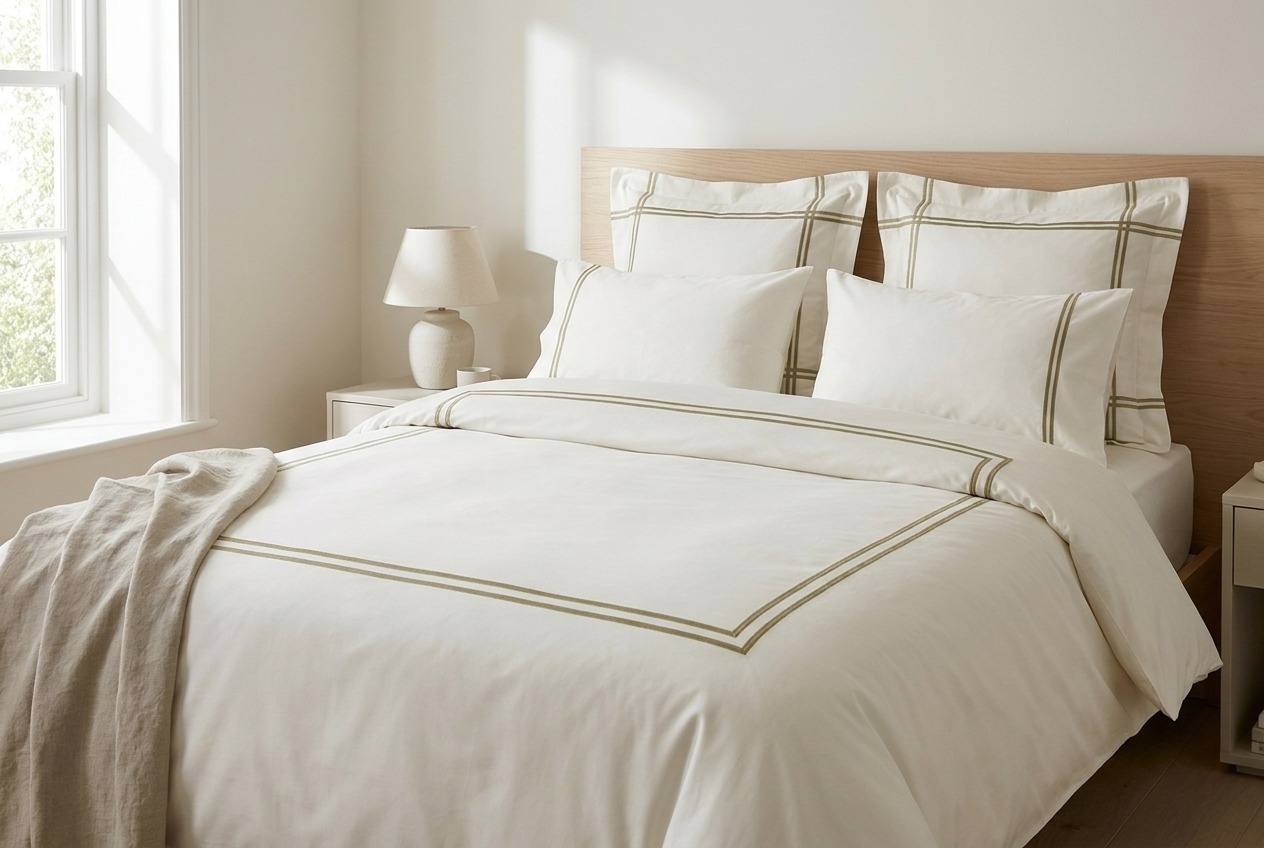
Embroidered duvet covers are the fastest way to make a bedroom look considered rather than just furnished. A single stitched border does what a plain white set never manages: it signals intent. But not all embroidery survives a Nigerian laundry cycle, and the difference between a set that ages beautifully and one that puckers after two months is rarely visible in the product photo.
This guide explains what to actually look for. We cover fabric, stitch construction, real Nigerian prices, pillowcase styles, and the care routine that protects your investment.
What Are Embroidered Duvet Covers?
An embroidered duvet cover is a removable fabric case for your duvet insert, decorated with thread stitched directly into the cloth rather than printed onto its surface. The design is physically built into the textile.
Embroidered duvet covers protect the duvet quilt inside while adding style and elegance to your bed. They are easy to remove for washing, and most sets come with matching Oxford or Housewife pillowcases for a coordinated luxury bedding look.
Embroidery styles vary widely. A satin-stitch monogram reads formal and hotel-like. A tonal vine border along the top hem feels softer and more residential.
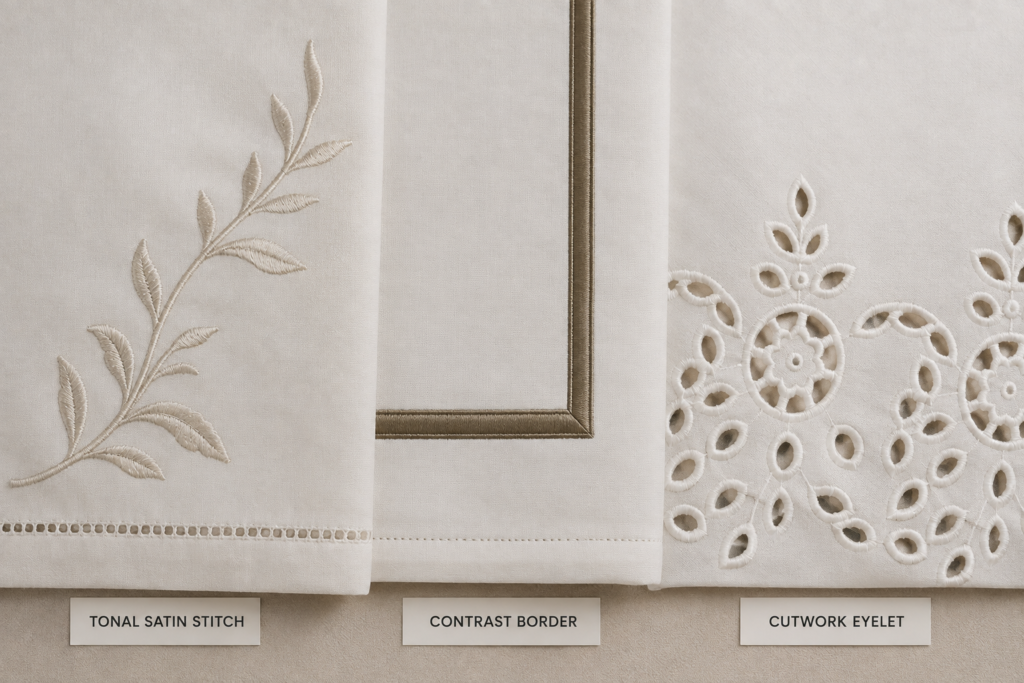
The three finishes you’ll encounter
- Tonal embroidery thread matches the base fabric. Subtle, texture-led, hardest to date.
- Contrast embroidery a second colour outlines the design. High impact, needs the rest of the room to stay quiet.
- Cutwork or eyelet fabric is removed and edges stitched. Beautiful, but more fragile in high-traffic homes.
Why Embroidery Beats Printed Patterns
Printed bedding fades. That’s not a manufacturing defect it’s chemistry. Pigment sits on the fibre surface, and every wash cycle abrades a little more of it away.
Embroidery works differently. The colour lives in the thread itself, and the thread is anchored through the weave.
Here’s the practical result: a printed duvet cover typically looks tired around wash 20 to 30. A well-made embroidered set still reads as luxury bedding well past that point, because the decorative element hasn’t degraded only the base fabric has softened, which most people actually prefer.
Do Embroidered Duvet Covers Work in Nigeria’s Climate?
This is the most common hesitation, and it’s a fair one. Nigeria is warm year-round, and heat is a genuine sleep problem.
The Sleep Foundation puts the ideal bedroom temperature at roughly 18.3°C (about 65°F), with most adults sleeping best somewhere in the 15.6–20°C band. Research it has covered found that when bedrooms climbed to around 30°C, sleep efficiency dropped by 5 to 10 percent, meaning more time lying awake.
So the question matters. Here’s the answer most retailers won’t give you plainly:
Embroidery does not make bedding hotter. Fabric choice does.
The stitched area is a small fraction of total surface usually a border or a central motif. The other 85 to 95 percent of the cover is plain cloth, and that’s what governs airflow.
What actually controls breathability
| Factor | Cooler choice | Warmer choice |
|---|---|---|
| Fibre | Long-staple cotton, linen | Polyester, microfibre blends |
| Weave | Percale (crisp, matte) | Sateen (smooth, denser) |
| Weight | Lighter GSM | Heavy GSM |
| Embroidery coverage | Border only | All-over dense fill |
Choose cotton in a percale weave with border embroidery, and you get elegant bedroom décor without trapping heat. Choose an all-over polyester design, and you’ll feel it by 2am.
Embroidered duvet covers perform best when paired with a lightweight duvet quilt instead of a winter-weight insert. In Lagos, Abuja, or Port Harcourt, this simple choice improves breathability and comfort without compromising the luxurious look of your bed.Pair the cover with a lightweight duvet quilt rather than a winter-weight insert. In Lagos, Abuja or Port Harcourt, that single swap does more for comfort than anything else on this list.
How to Choose Embroidered Duvet Covers: 6 Checks
1. Fibre content before thread count
Read the composition label first. Long-staple cotton produces smoother, stronger yarn with fewer exposed fibre ends, which is why it pills less over time.
Thread count is genuinely useful but only within the same fibre and weave. A 400-count long-staple cotton percale will outlast an 800-count blend, despite the smaller number.
Anything above roughly 800 in this category usually reflects multi-ply yarn counting rather than a finer cloth.
2. Stitch density and thread type
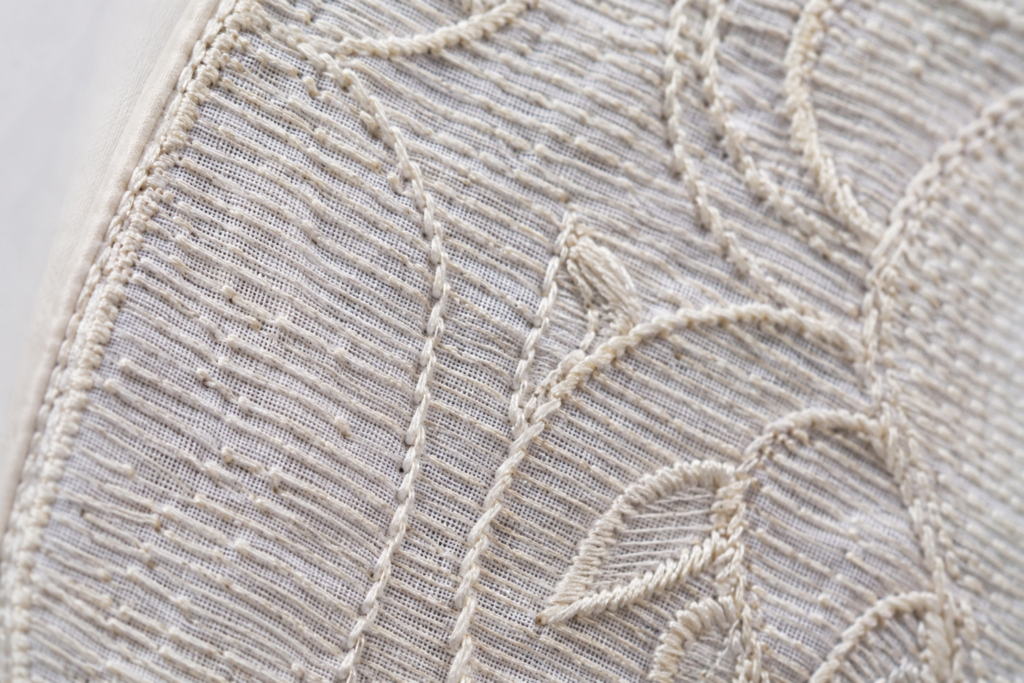
Run your thumb across the embroidery. Quality stitching feels raised and firm, not scratchy or loose.
Polyester embroidery thread resists fading better than rayon. Cotton thread looks the most natural but demands gentler washing.
3. Stabiliser residue
Embroidery machines use a backing material to hold fabric taut. Cheap manufacturers leave stiff plastic stabiliser in place, which you’ll feel against your skin at night.
Check the reverse. A soft, cloth-like backing or none at all is the sign of a finished product rather than a rushed one.
4. Closure and internal ties
Button closures hold better than zips over years of use, because a broken zip retires the whole cover.
Interior corner ties matter more than people expect. Without them, your duvet migrates into a lump at the bottom of the cover within a week.
5. Sizing against your actual mattress
Nigerian bed sizes vary by manufacturer. Measure your mattress and duvet insert before ordering.
| Bed size | Typical mattress (cm) | Duvet cover guide |
|---|---|---|
| Single | 90 × 190 | 135 × 200 |
| Double | 135 × 190 | 200 × 200 |
| Queen | 150 × 200 | 225 × 220 |
| King | 180 × 200 | 245 × 220 |
| Super King | 200 × 200 | 260 × 220 |
Always confirm against the retailer’s published dimensions, sizing conventions differ between UK, US and locally produced bedding.
6. Independent safety certification
Bed linen sits against your skin for a third of every day. OEKO-TEX® STANDARD 100 is the most recognised third-party label for textiles tested for harmful substances, and it applies stricter limits to products with direct skin contact bed linen falls into this category.
Locally, the Standards Organisation of Nigeria (SON) sets and enforces product quality standards for goods sold in the country. Reputable premium bedding retailers can speak to both.
Oxford vs Housewife Pillowcases
Your pillowcases decide whether the bed looks styled or merely made. Two formats dominate premium bedding.
| Feature | Oxford pillowcase | Housewife pillowcase |
|---|---|---|
| Border | Flat stitched flange, 5–8cm | No border sewn to edge |
| Look | Formal, hotel-style bedding | Clean, minimal, everyday |
| Best for | Front-of-bed styling, guest rooms | Sleeping pillows, layering behind |
| Embroidery placement | On the flange | Along the opening or corner |
| Ironing | Needs pressing to sit flat | Forgiving |
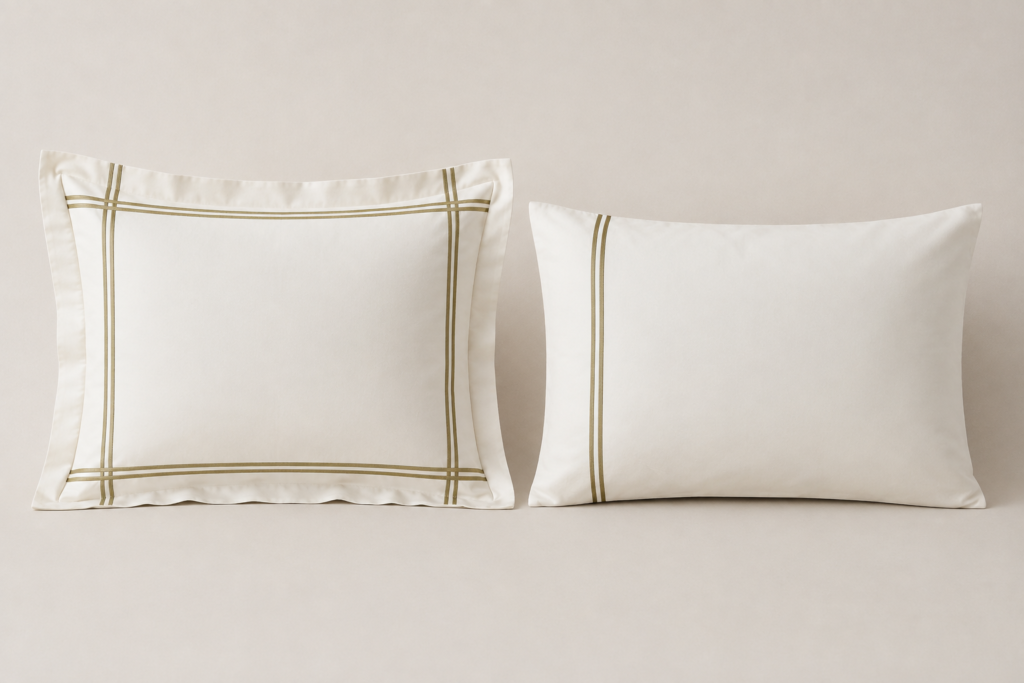
The designer approach: use Oxford cases at the back for structure and housewife cases in front for sleeping. You get the visual weight of a styled bed without ironing every pillow you actually use.
An envelope pillowcase where an internal flap tucks the pillow in keeps everything neat and stops the pillow creeping out overnight. It’s a small detail that separates properly finished luxury bed linen from the rest.
5 Common Mistakes Buyers Make
- Chasing thread count across different fabrics. The number only compares like with like.
- Ignoring the duvet insert. A beautiful cover over a heavy winter quilt is still a hot bed.
- Buying embroidery that fights the room. If your headboard is already patterned, go tonal.
- Skipping the size check. An undersized cover strains seams and tears at the corners.
- Washing on high heat with the rest of the laundry. Zips and buttons on other garments abrade embroidery thread.
Expert Care Guide: Protecting Your Investment
Bedding hygiene is a health issue, not just a housekeeping one. Dust mites live in bedding and feed on shed skin flakes, and they trigger allergy and asthma symptoms in sensitive people.
Mayo Clinic advises washing sheets, pillowcases and bedcovers weekly in hot water of at least 54.4°C (130°F) to kill mites and remove allergens. The American Lung Association recommends keeping indoor humidity below 50 percent, since mites thrive in warm, damp conditions a relevant point in coastal Nigerian cities.
That creates a tension with delicate embroidery. Here’s how to resolve it:
The practical routine
- Wash the sheets and pillowcases weekly at the hottest temperature the fabric label permits.
- Turn the duvet cover inside out before washing. This shields the embroidery from drum friction.
- Wash bedding separately from clothing with hardware.
- Skip fabric softener. It coats cotton fibres and reduces breathability over time.
- Line dry in shade, not direct midday sun, which fades coloured thread.
- Iron on the reverse while slightly damp, using a pressing cloth over raised stitching.
- Rotate two or three sets. Nothing extends bedding life more effectively than not wearing one set out.
For pillows and duvet inserts, which can’t be washed weekly, use protectors as a barrier layer and launder those instead.
Styling Your Bed: A Simple Layering Formula
You don’t need a decorator to get a hotel-standard result. Work in layers, back to front.
- Fitted sheet same tone as the duvet cover.
- Duvet cover the design anchor.
- Oxford pillowcases two, standing upright against the headboard.
- Housewife pillowcases two, laid flat in front.
- Accent cushion or folded throw one only.
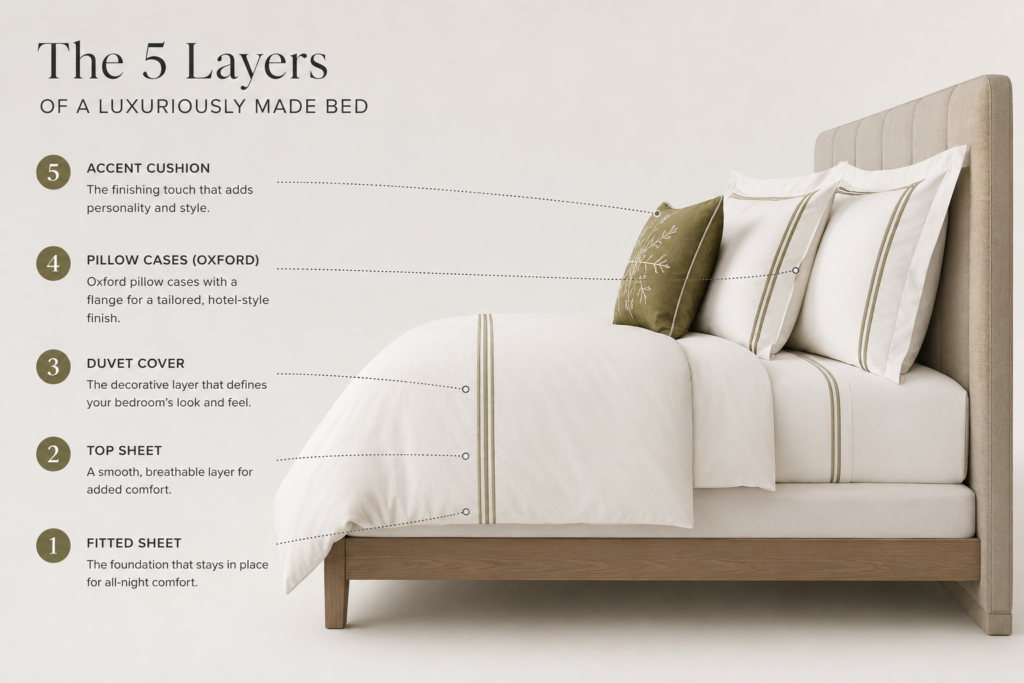
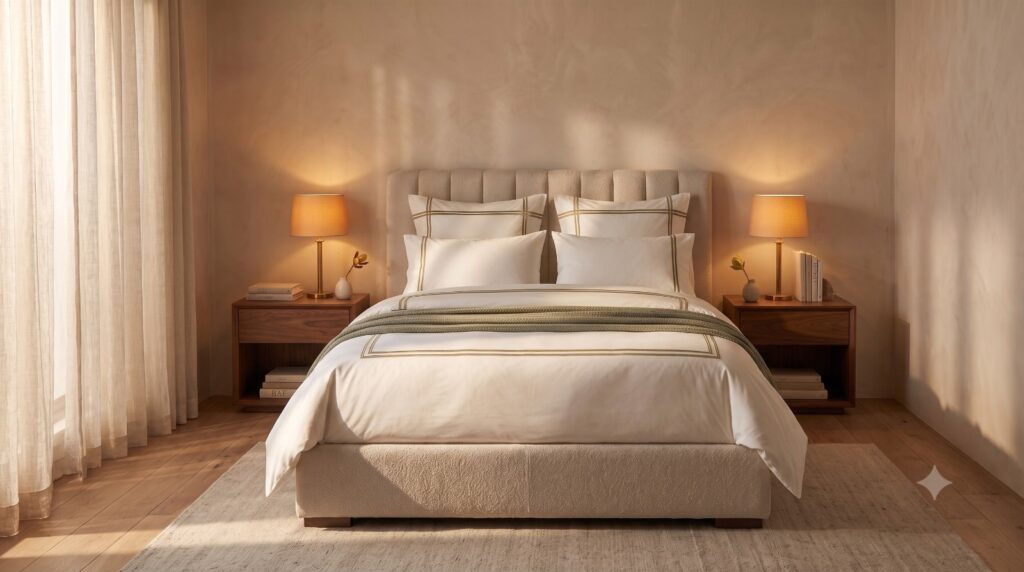
Colour rule: keep the room’s palette to three tones, and let the embroidery be one of them. A bedroom makeover fails most often from too many competing colours, not from too few.
For a cohesive scheme, echo the embroidery colour somewhere small a cushion, a lampshade, the binding on a blanket. Repetition reads as intention.
Frequently Asked Questions
What are embroidered duvet covers made of? Most premium versions use long-staple cotton in a percale or sateen weave, with polyester or cotton embroidery thread. Cotton offers the best balance of breathability and durability for Nigeria’s climate.
Are embroidered duvet covers hot to sleep under? Not inherently. Heat depends on fibre, weave and duvet weight rather than the stitching. Cotton percale with border embroidery sleeps cool; dense polyester with all-over embroidery does not.
How often should I wash my duvet cover? Weekly is the standard recommendation from allergy specialists, alongside sheets and pillowcases. If you use a top sheet, some households stretch the duvet cover to every two weeks.
Can embroidered bedding go in a washing machine? Yes. Turn it inside out, use a gentle cycle, wash it separately from clothing with zips, and skip fabric softener.
Does thread count matter for embroidered bedding? Only within the same fibre and weave. Fibre quality and weave type predict durability far more reliably than the headline number.
What’s the difference between Oxford and housewife pillowcases? Oxford cases have a flat stitched border around the edge for a formal look. Housewife cases are sewn to the edge with no flange, giving a cleaner, more casual finish.
How much do embroidered duvet covers cost in Nigeria? Premium bedding sets generally run from around ₦89,000 upward depending on size and composition, with duvet quilt inserts sold separately from about ₦42,000.
Are embroidered duvet covers a good wedding gift? They’re one of the strongest options practical, visibly premium, and not something most couples buy for themselves. Neutral or tonal designs suit any recipient’s décor.
Will the embroidery fade? Quality polyester embroidery thread resists fading well. Fading usually comes from direct sun drying, chlorine bleach, or harsh detergents rather than from washing itself.
Do I need a separate duvet insert? Yes. The cover is a case; the duvet quilt inside provides warmth and loft. Buying them together ensures a proper fit.
What size duvet cover fits a Nigerian queen bed? A queen mattress is typically 150 × 200cm, which usually pairs with a 225 × 220cm cover. Always measure and confirm against the retailer’s stated dimensions.
How do I stop my duvet bunching inside the cover? Choose a cover with internal corner ties and secure them to the loops on your duvet insert. It takes thirty seconds and solves the problem permanently.
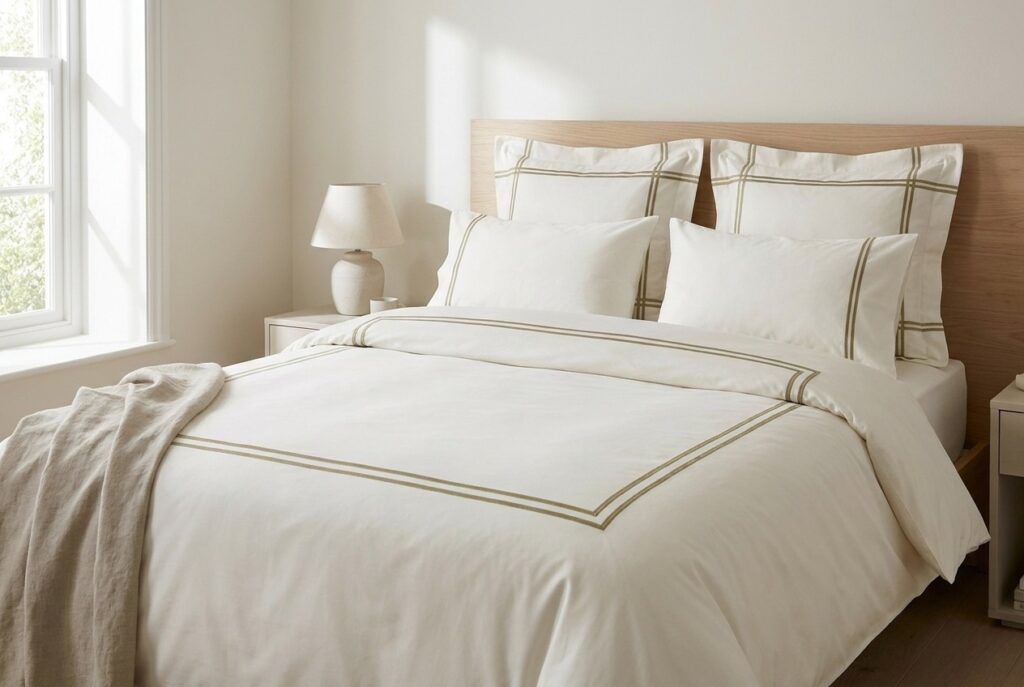
Good bedding is one of the few purchases you use every single night. That makes it worth getting right the first time.
Prioritise fibre quality over thread count, match the weave to your climate, check the reverse of the stitching, and wash gently but regularly. Embroidered duvet covers reward that attention by looking better in year three than most bedding looks in month three.
Esorae Home has spent over fifteen years building bedding for Nigerian homes, hotels and serviced apartments which means our sets are tested against real heat, real humidity and real laundry habits.
Explore the Collection
Browse the full bedding range to pair a duvet quilt with matching Oxford pillowcases, or register your interest in our Embroidered Collection, launching soon.
Furnishing multiple rooms, an Airbnb or a boutique hotel? Our bulk orders team handles hospitality supply directly. Prefer to talk it through first? Contact a specialist or call +234 902 469 7557 we’ll help you choose embroidered duvet covers and luxury bed linen that fit your space, your climate and your budget.