A memory foam pillow is filled with viscoelastic polyurethane foam that softens under body heat and pressure, so it moulds to your head and neck. Its main benefits are contoured support, pressure relief, motion isolation for couples and a shape that lasts two to three years. It can feel warm, and it is not ideal for every sleeper.
This guide explains how a memory foam pillow works, who gains the most from one, where it falls short, and how to choose and care for it, with a look at the E’sorae Home memory pillow at the end.
What Is a Memory Foam Pillow?
A memory foam pillow is a pillow made from viscoelastic polyurethane foam, a material that reacts to both pressure and temperature. When you lie down it slowly takes the shape of your head and neck, then returns to its original form once you get up. The slow return is why it is called “memory” foam.
The material is often described as low-resilience polyurethane foam, and its properties change with temperature. Pillows come in four common builds:
- Solid (one-piece) foam: a single block with firm, consistent support.
- Contour or cervical: shaped with a dip for the head and a raised roll for the neck.
- Shredded foam: loose pieces that let you adjust the height and softness.
- Gel-infused or open-cell: designs aimed at reducing trapped heat.
What Are the Benefits of a Memory Foam Pillow?
The main benefits of a memory foam pillow are contoured head and neck support, reduced pressure on the neck and shoulders, less disturbance from a partner’s movement, and a shape that holds longer than most fibre pillows. Whether you feel those benefits depends on choosing the right height for your sleeping position.
1. It supports the natural curve of your neck
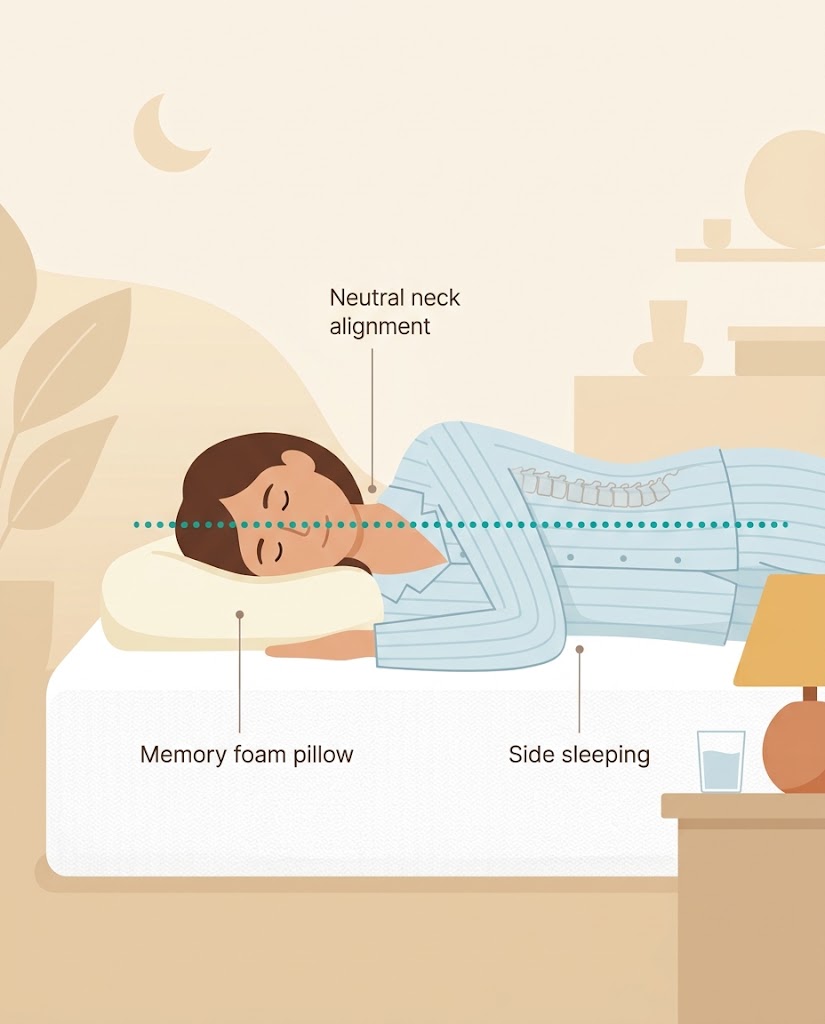
The foam yields to the shape of your head and neck, filling the gap between them and the mattress. A review of pillow research on PubMed Central notes that pillow height affects cervical spine alignment, and that poor head and neck support is linked to neck pain and muscle stiffness. Contouring is useful because the foam fills that gap.
2. It spreads pressure instead of creating pressure points
Because the foam yields where your head is heaviest, weight is spread across a wider area. Many sleepers find this reduces the morning stiffness that comes from a lumpy or flattened pillow. This is a comfort benefit that people report; it is not a treatment for any medical condition.
3. It can improve alignment when the height is right
Cleveland Clinic’s chiropractor guidance is that a good pillow keeps your neck parallel to the mattress, not bent up or down. Memory foam can do that well, but only if the loft suits your shoulders and mattress. The wrong height feels fine at first and causes trouble hours later.
4. It isolates motion for couples
Foam absorbs movement rather than passing it across the pillow, so a partner who turns over is less likely to wake you. E’sorae Home lists motion isolation as a feature of its memory pillow; how much you notice will depend on your mattress too.
5. It holds its shape longer than most fibre pillows
The Sleep Foundation advises replacing memory foam pillows, compared with 6 months to 2 years for polyester. Foam density and care both affect where in that range yours lands.
How Does a Memory Foam Pillow Work?
A memory foam pillow works by softening where your head and neck press into it and where your body warms it, then firming up again slowly when you move or leave. This slow response is what creates the cradling feel. The same temperature sensitivity is why the pillow can feel firmer in a cool room and softer in a warm one.
Memory Foam vs Latex vs Feather vs Polyester
The difference between these fillings is how they balance support, heat and lifespan: memory foam contours deeply and lasts 2 to 3 years, latex is springier and often cooler, feather and down are soft but need fluffing, and polyester is cheapest but wears out fastest. The best option depends on your sleeping position and how warm you sleep.
| Filling | Support feel | Heat |
|---|---|---|
| Memory foam | Deep contouring, slow rebound | Can run warm |
| Latex | Bouncy, supportive | Generally cooler |
| Feather and down | Soft, moves with you | Moderate |
| Polyester fibre | Soft, flattens quickly | Moderate |
Lifespans are from the Sleep Foundation’s care guide. Cleveland Clinic’s chiropractor ranks latex as generally the best material for staying cooler, advises memory foam for people who are allergic to latex, and says feather pillows tend to cause the most neck pain. Heat and fit are the real trade-offs, not a clear winner.
Is a Memory Foam Pillow Good for Neck Pain?
A memory foam pillow can help with neck discomfort when its height and firmness match your sleeping position, because it keeps the neck supported rather than bent. It is not a cure, and research is limited: the PubMed Central review concludes that an ideal pillow height range cannot yet be pinned down from the evidence. Persistent or severe neck pain should be checked by a doctor or physiotherapist.
Cleveland Clinic also notes that memory foam bends to your curves without guaranteeing the exact support you need, so choosing one can involve some trial and error.
Who Should Use a Memory Foam Pillow?
A memory foam pillow suits side and back sleepers who want steady support, couples who share a bed, and people replacing a flat fibre or feather pillow. It is a weaker fit for hot sleepers, people sensitive to a new-foam smell, and stomach sleepers, who need a very thin pillow or none.
- Side sleepers need more height to fill the gap between shoulder and head.
- Back sleepers generally need a medium, lower-profile pillow.
- Stomach sleepers are usually better with a thin pillow, since a tall one tilts the head back.
- Hot sleepers should consider ventilated, gel-infused or latex options.
Do Memory Foam Pillows Make You Hot?
Memory foam can retain more body heat than latex because it conforms closely and has limited airflow. In warm bedrooms this is the most common complaint, and it varies by foam design. Open-cell and gel-infused foams are made to reduce it, though results differ between products.
For Nigeria’s warm, humid climate, a few habits help:
- Use a breathable cotton pillowcase, and change it often.
- Keep the bedroom cool, with air conditioning or a fan, before you sleep.
- Air a new pillow in a ventilated room first to disperse the initial foam smell.
- If you still wake hot, try a lower loft or a different filling instead of forcing it. If you want to stay with memory foam, you could compare E’sorae Home’s Gel Infused Memory Foam Pillow and Bamboo Charcoal Memory Foam Pillow against the standard memory pillow.
How to Choose a Memory Foam Pillow
Choose a memory foam pillow by matching its height to your sleeping position and mattress, then checking foam type, firmness and care. Your mattress matters because a firm mattress needs a thicker pillow, while a soft or pillow-top mattress lets your shoulder sink and needs a thinner one.
- Identify your main sleeping position. Side, back or stomach decides the height you need.
- Match the height to your mattress. Firm mattress, thicker pillow; soft or foam-topped mattress, thinner pillow.
- Pick the foam style. Solid for steady support, shredded if you want to adjust the fill, contour if you want a defined neck roll.
- Check the heat features if you sleep warm.
- Look at care and cover details. A removable, washable cover keeps the pillow fresher.
- Give it a few nights. Check how your neck feels on waking rather than judging at first lie-down.
Common Mistakes to Avoid
- Choosing by softness in the shop instead of by sleeping position.
- Using a tall pillow on a soft mattress or a thin one on a firm mattress.
- Putting the pillow in a washing machine or dryer.
- Keeping it long after it stops bouncing back.
- Expecting a pillow to fix pain that needs medical attention.
How Long Does a Memory Foam Pillow Last, and How Do You Care for It?
A memory foam pillow typically lasts two to three years. Replace it sooner if it stays flat, develops lumps, or you wake with a sore neck. The Sleep Foundation advises against machine washing: spot clean and hand wash with gentle detergent about every two months, then air dry flat.
Wash pillowcases weekly, and use a washable pillow protector to keep sweat and oils out of the foam.
The E’sorae Home Memory Pillow
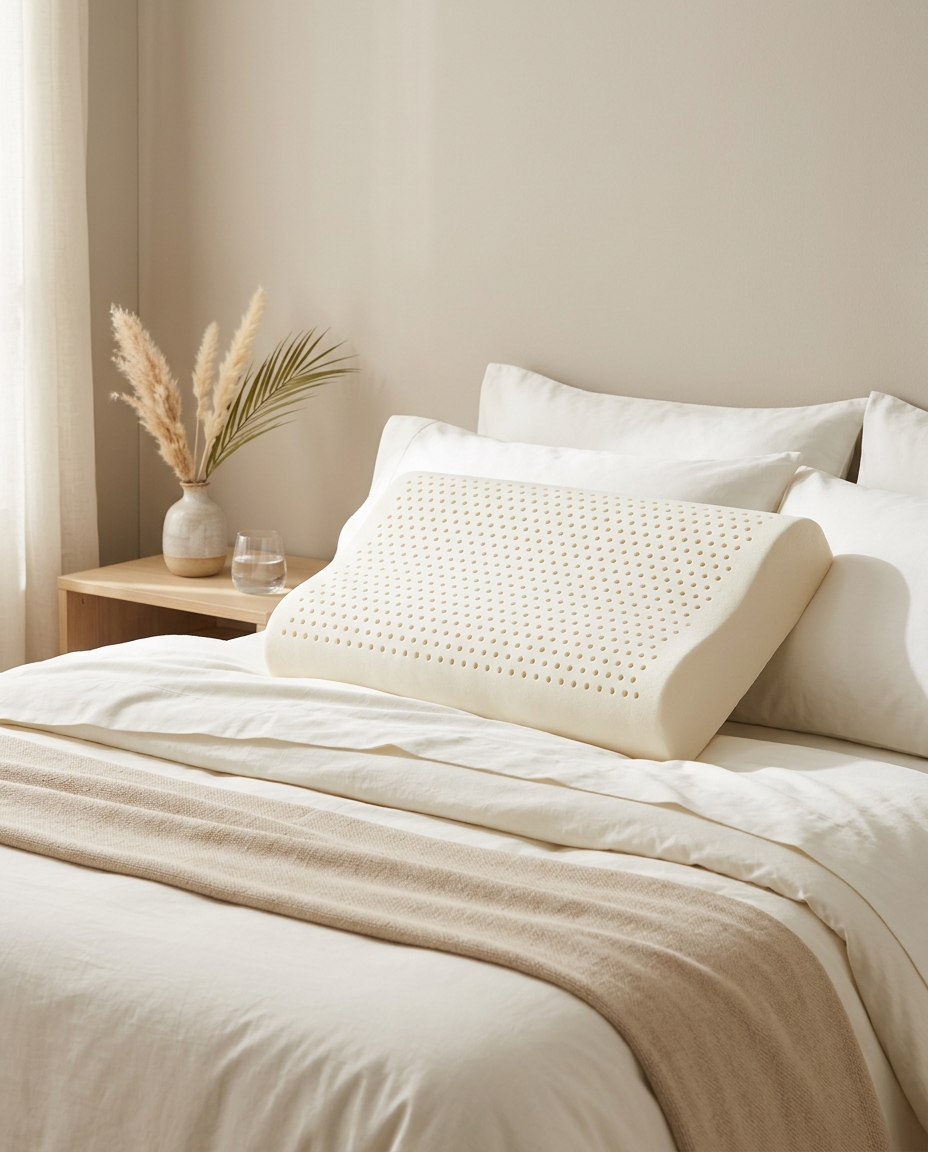
E’sorae Home is a Nigerian luxury homeware brand covering mattresses, pillows, bedding and home fragrance. Its memory pillow is described on the product page as moulding to the contours of the head and neck, supporting healthy sleep posture, and offering a plush yet supportive feel. The page also lists slow rebound, motion isolation for couples, and easy care.
The Memory pillow comes with bundle savings of 5% for two pillows and 10% for four. Prices and offers change, so check the product page for current details. E’sorae Home also offers other memory foam options, so you can compare before choosing:
Check each product page for its own features, size and price.
If you are unsure which suits you, try the pillow with your usual sleeping position and compare how your neck feels over several mornings.
Is a Memory Foam Pillow Worth It?
A memory foam pillow is worth it if you are a side or back sleeper who wants steady, contoured support and you do not run very hot at night. It is less worthwhile for hot sleepers or stomach sleepers. Judge value by fit and lifespan, not price alone: a pillow that suits you for two to three years costs less per night than one you replace twice.
Conclusion
A memory foam pillow offers contoured support, pressure relief, motion isolation and a long-lasting shape, provided the height suits how you sleep and you manage heat in warm weather. Match loft to your sleeping position and mattress, give it a few nights, and replace it every two to three years.
To see whether it suits you, explore the E’sorae Home memory pillow.