


How to Choose Bedsheets That Actually Last in Nigeria’s Climate
You spend roughly a third of your life in direct contact with your bedsheets. Yet most of us pick them the way we pick phone chargers, grab whatever is nearby, hope for the best, replace it in six months.
That habit gets expensive. It also costs you sleep.
This guide covers what separates cotton bedsheets that stay soft for years from the ones that pill after four washes: fabric, weave, thread count, sizing, care, and the specific pressures Nigeria’s heat and humidity place on bed linen.
What Actually Makes a Bedsheet Good
Quick answer: A good bedsheet combines long-staple cotton fibre, a single-ply yarn, an appropriate weave for your climate, and honest labelling. Thread count alone tells you very little.
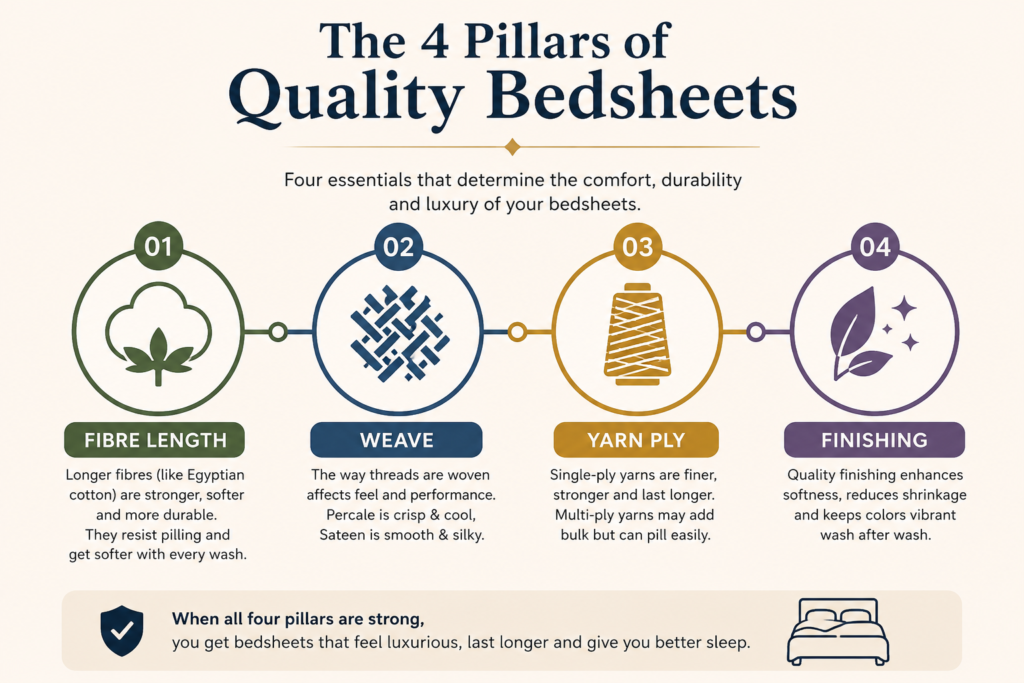
Four variables decide how a sheet feels and how long it survives: fibre length, weave, yarn construction, and finishing. Every claim on a package traces back to one of them.
Longer cotton fibres, called long-staple or extra-long-staple, spin into smoother, stronger yarn. Fewer fibre ends poke out of the surface. That is why premium bed sheets resist pilling while cheap ones develop that fuzzy grey rash across the middle.
Short-staple cotton does the opposite. It sheds, thins, and goes rough exactly where your body rests.
Why Bedsheets Matter More in Nigeria’s Climate
Sleep scientists generally point to a cool bedroom for quality rest. The Sleep Foundation puts the ideal range at roughly 65 to 68 degrees Fahrenheit, around 18 to 20 degrees Celsius. Most Nigerian bedrooms never come close.
Lagos sits in a tropical climate that stays warm and heavy year-round. Average humidity there runs near 78 percent, and the air is humid across every season. Add unstable power supply, and your bedding is doing thermal work that a thermostat cannot.
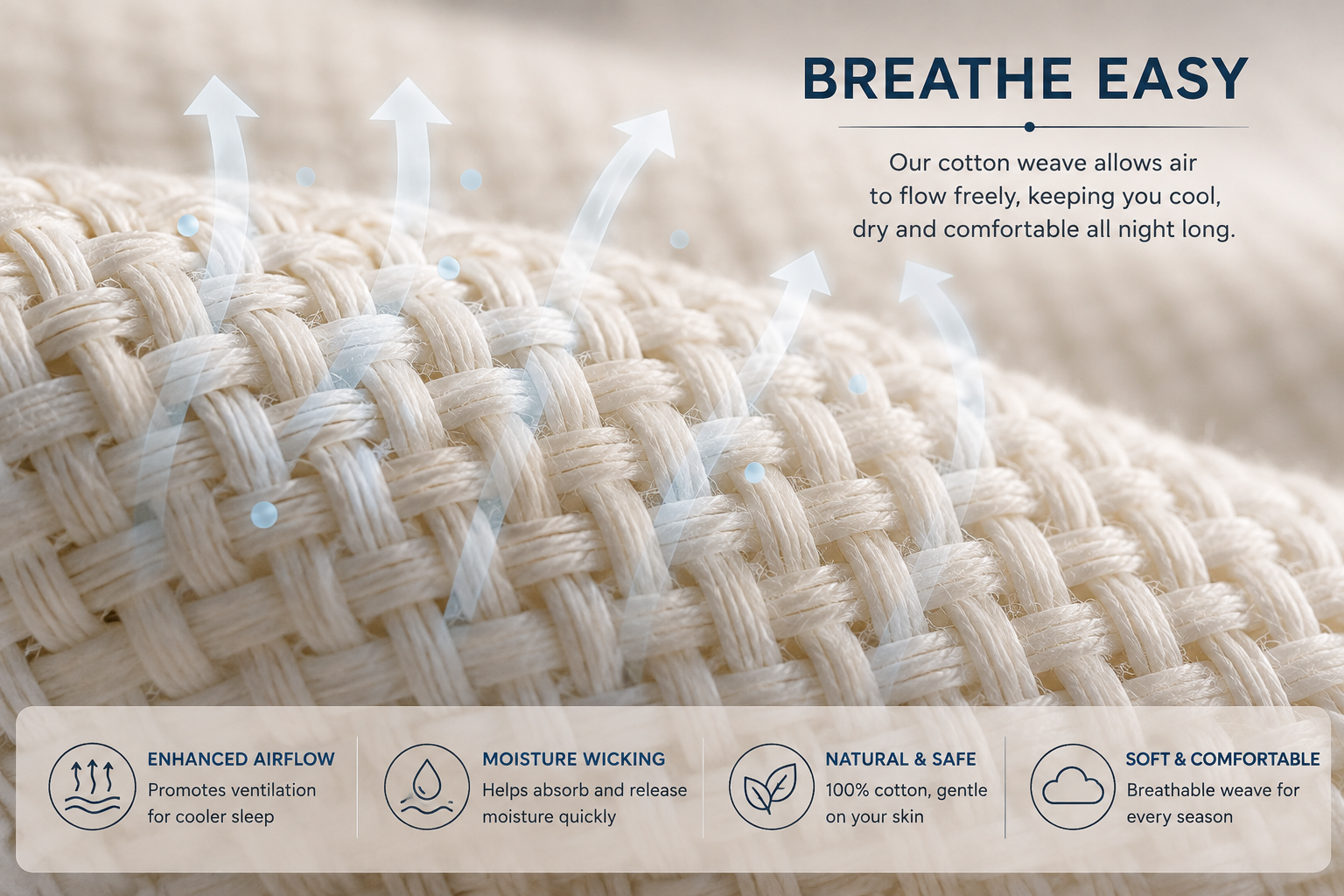
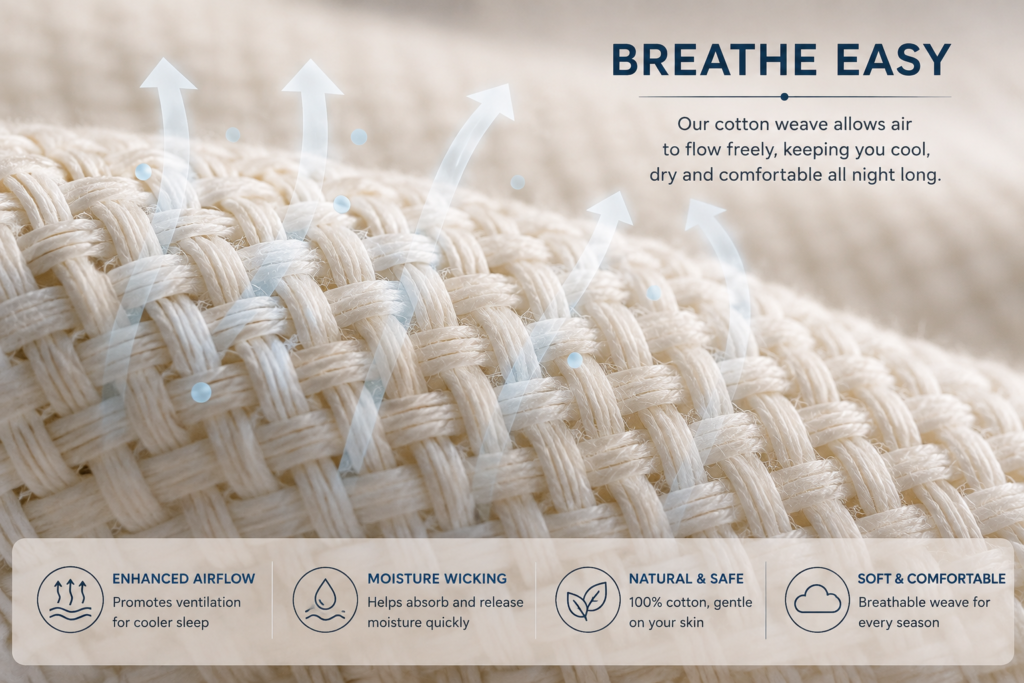
This changes the buying priority completely. In a temperate market, shoppers chase softness. Here, breathability comes first.
Air movement through the fabric carries moisture away from your skin. A dense, heavy sheet traps it against you, you wake up damp, and you blame the mattress.
Humidity also encourages dust mites, which thrive in warm, moist bedding. That matters for anyone managing asthma, eczema or seasonal allergies.
Bedsheet Fabrics Compared
Here is how the common options behave in a hot, humid home.
| Fabric | Breathability | Feel | Durability | Best For | Watch Out For |
|---|---|---|---|---|---|
| Egyptian cotton (ELS) | Excellent | Soft, gets softer with age | Very high | Year-round comfort, luxury bedsheets | Counterfeit labelling |
| Pima / Supima cotton | Excellent | Smooth, plush | High | Premium bed sheets at lower cost | Blended imitations |
| Standard 100% cotton | Good | Crisp to average | Moderate | Guest rooms, students | Short-staple pilling |
| Cotton-polyester blend | Fair | Slick, low-drape | Moderate | Hostels, high-turnover use | Traps heat badly |
| Microfibre / polyester | Poor | Silky at first | Low-moderate | Tight budgets only | Clammy in humidity |
| Linen | Outstanding | Textured, relaxed | Very high | Hot sleepers who like texture | Wrinkles by design |
| Bamboo viscose | Very good | Cool, fluid | Moderate | Sensitive skin, hot sleepers | Vague fibre labelling |
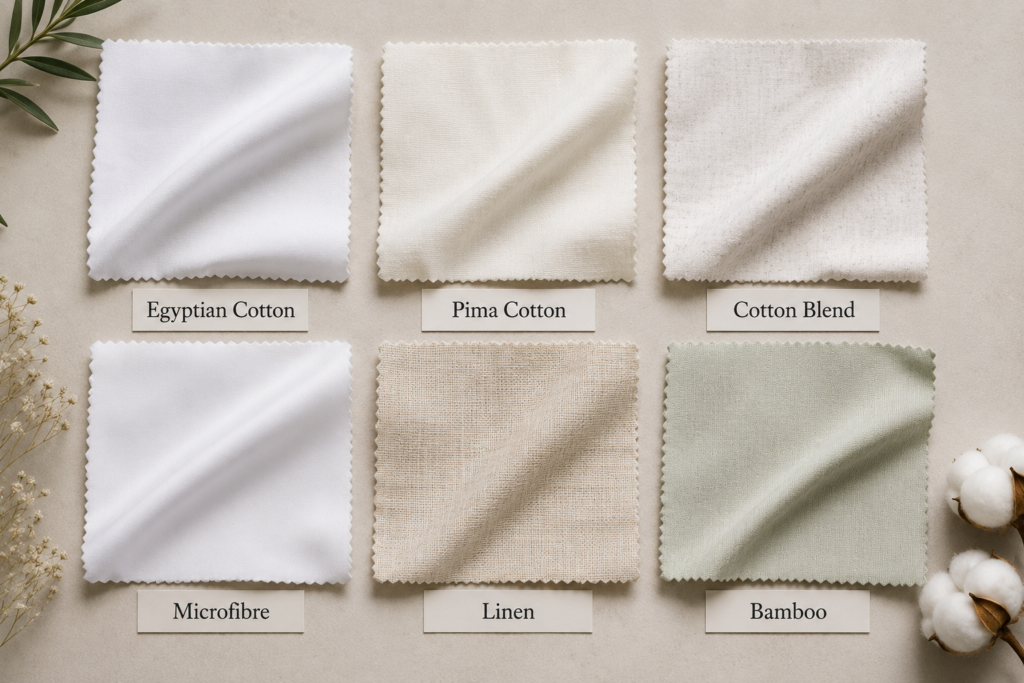
The short version: for Nigerian bedrooms, natural fibres win. Cotton bedsheets and linen let heat escape. Polyester holds it against your body.
Egyptian Cotton Bedsheets: What the Label Should Prove
“Egyptian cotton” is one of the most abused phrases in home textiles. The name refers to a specific extra-long-staple species grown in Egypt’s Nile Delta, not to a feeling, a finish, or a price bracket.
The industry built a verification system precisely because of counterfeiting. The Cotton Egypt Association manages the registered Egyptian Cotton trademark and, working with Bureau Veritas, uses DNA testing that recognises the genomic fingerprint of the fibre at any stage of the supply chain.
Because that DNA marker survives processing, dyeing and shipping, samples can be collected at multiple points along the journey from field to finished product. The practical takeaway for shoppers is simple.
Ask the seller three questions:
- Is the cotton extra-long-staple, and where was it grown?
- Is the yarn single-ply?
- Can you show certification or supplier documentation?
A retailer selling genuine Egyptian cotton bedsheets will answer without hesitation. Vagueness is your answer.
A note on honest alternatives
Supima and Pima cotton are also extra-long-staple and often deliver comparable performance for less money. A well-made Pima sheet beats a mislabelled “Egyptian” sheet every single time.
Percale vs Sateen: The Weave Decision
Fibre decides quality. Weave decides personality.
| Percale | Sateen | |
|---|---|---|
| Weave pattern | One over, one under | Three or four over, one under |
| Feel | Crisp, matte, hotel-like | Smooth, silky, subtle sheen |
| Temperature | Cooler, more airflow | Slightly warmer, denser |
| Wrinkling | More visible | Less visible |
| Best for | Hot sleepers, humid nights | Air-conditioned rooms, cooler evenings |
Hot sleepers should default to percale. The open structure moves air. It also feels cooler on first contact, which matters when you are climbing into bed after a long day in traffic.
Sateen suits anyone with steady air conditioning or a preference for drape. It photographs beautifully too, which is why interior stylists reach for it.
Percale vs Sateen: The Weave Decision
Fibre decides quality. Weave decides personality.
| Percale | Sateen | |
|---|---|---|
| Weave pattern | One over, one under | Three or four over, one under |
| Feel | Crisp, matte, hotel-like | Smooth, silky, subtle sheen |
| Temperature | Cooler, more airflow | Slightly warmer, denser |
| Wrinkling | More visible | Less visible |
| Best for | Hot sleepers, humid nights | Air-conditioned rooms, cooler evenings |
Hot sleepers should default to percale. The open structure moves air. It also feels cooler on first contact, which matters when you are climbing into bed after a long day in traffic.
Sateen suits anyone with steady air conditioning or a preference for drape. It photographs beautifully too, which is why interior stylists reach for it.
The Thread Count Trap
Thread count means threads per square inch, vertical and horizontal combined. Somewhere in the 1990s it became a marketing scoreboard, and the numbers stopped meaning much.
The trick is ply. Manufacturers twist two or three thin yarns into one thread, then count each strand separately. A genuine 300-count fabric becomes an advertised “900.”
Regulators pushed back. According to the FTC, individual threads should be counted as one thread regardless of whether they are single-ply or multi-ply, since some suppliers had been labelling bedding with inflated figures.
The Commission’s enforcement staff stated that consumers could be misled by inflated thread counts produced by multiplying the actual count by the number of plies, and suggested disclosing both figures for example, 300 thread count, two-ply yarn.
What this means on the shop floor:
- 200–400 single-ply is the practical range for crisp, breathable cotton bed sheets
- 300–500 single-ply suits sateen and denser luxury bedsheets
- Above 600, treat the number as marketing until proven otherwise
- Four-digit claims almost always signal multi-ply counting
A 400-count sheet in single-ply Egyptian cotton will outperform an 1,800-count sheet in short-staple yarn. Every time.
How to Buy Bedsheets: A 7-Point Checklist
- Confirm the fibre. Look for “100% long-staple cotton,” not just “100% cotton.”
- Check ply. Single-ply is the quality marker. Multi-ply inflates numbers.
- Match weave to climate. Percale for heat, sateen for cooled rooms.
- Measure your mattress depth. Fitted sheets fail on depth more than on width.
- Verify certification. OEKO-TEX Standard 100 confirms the textile was tested for harmful substances.
- Feel the hem and stitching. Double-turned hems and tight stitch density signal careful finishing.
- Buy two sets minimum. Rotation roughly doubles the lifespan of both.
That last point saves more money than any discount code. Fabric needs recovery time between washes.
Bed Sizes and How Much Fabric You Need
Nigerian bed sizes are quoted in feet, which trips up shoppers using imported sizing charts. Measure before you order.
| Common Nigerian Size | Approx. Dimensions | Typical Sheet Set Includes |
|---|---|---|
| Single / Twin | 3ft × 6ft | Flat sheet, fitted sheet, 1 pillowcase |
| Small double | 4ft × 6ft | Flat, fitted, 2 pillowcases |
| Double / Queen | 4.5ft × 6ft | Flat, fitted, 2 pillowcases |
| King | 6ft × 6ft | Flat, fitted, 2–4 pillowcases |
| Super king | 6ft × 7ft | Flat, fitted, 4 pillowcases |
Depth matters more than most people realise. Orthopaedic and memory foam mattresses run thicker than older spring models. Add a mattress topper and you may need a deep-pocket fitted sheet.
Measure top to bottom with the topper in place. Then buy for that number.
Common Mistakes Shoppers Make
- Chasing thread count. The single most expensive mistake in bedding.
- Ignoring mattress depth. A fitted sheet that pops off at 3am ruins good fabric.
- Using fabric softener. It coats cotton fibres, reducing absorbency and breathability over time.
- Washing in cold water only. Cool washes preserve colour but do less for allergens.
- Overloading the machine. Sheets need room to move or they abrade against themselves.
- Drying in full sun repeatedly. Convenient, but harsh UV fades dyes and weakens fibres.
- Buying one set. No rotation means faster wear and no backup on laundry day.
- Skipping the pre-wash. New bedsheets soften noticeably after the first proper wash.
How to Wash Cotton Bedsheets Properly
Care determines lifespan more than price does. Here is a routine that works in a humid climate.
Step 1: Wash weekly. Mayo Clinic advises washing sheets, blankets, pillowcases and bedcovers weekly in hot water of at least 130°F (54.4°C) to kill dust mites and remove allergens.
Step 2 : Use less detergent. Excess soap leaves residue that stiffens fabric. Half the recommended dose is usually plenty.
Step 3 : Skip the softener. Add half a cup of white vinegar to the rinse instead. It strips residue without coating the fibres.
Step 4 : Dry in shade with airflow. Direct Nigerian sun is aggressive on dyes. A shaded, breezy line is kinder.
Step 5 : Remove while slightly damp. Then smooth by hand or press lightly. Cotton finishes drying flat.
Step 6 : Store dry and loose. Damp storage in high humidity invites mildew. Keep linen cupboards ventilated.
Mayo Clinic also recommends keeping indoor relative humidity below 50 percent, which is worth knowing if anyone in the home has a dust mite allergy.
Budget vs Premium: The Cost-Per-Night Maths
Sticker price is the wrong comparison. Cost per night is the right one.
Consider two scenarios, using rotation between two sets so each is used about 180 nights per year.
| Low-cost set | Premium cotton set | |
|---|---|---|
| Purchase price | ₦20,000 | ₦89,000 |
| Realistic lifespan | ~8 months of use | ~5 years of use |
| Nights of service | ~120 | ~900 |
| Cost per night | ~₦167 | ~₦99 |
| Replacement cycle | Roughly annually | Roughly every 5 years |
Illustrative model based on rotation between two sets. Actual lifespan depends on wash routine, water quality and usage.
The premium set costs four times more on day one. It costs less per night by year two, and it feels better for every one of those nights.
That gap widens for Airbnb hosts and guest houses, where linen turns over constantly and reviews mention sheets by name.
Expert Tips from Our Showroom Floor
After more than fifteen years fitting Nigerian homes with bedding, a few patterns repeat.
Tip 1 : Do the drape test. Hold the sheet up. Quality cotton falls in soft vertical folds. Stiff, board-like fabric usually means heavy sizing that washes out, leaving thinner cloth behind.
Tip 2 : Check the fitted sheet’s elastic. Elastic that runs all the way around holds far better than corner-only elastic on thick mattresses.
Tip 3 : Buy pillowcases separately when you can. Pillowcases wear out first from face oils and hair products. Replacing them individually extends the life of a full bedding set.
Tip 4 : Choose white or pale tones for guest rooms. They can be bleached and hot-washed indefinitely, which is why hotels use them.
Tip 5 : Give new bedsheets three washes before judging them. Finishing agents need to rinse out before the true hand feel appears.
Frequently Asked Questions
How often should I change my bedsheets?
Wash and change your bedsheets once a week, or more often in hot weather.
What is the best thread count for bedsheets?
A thread count of 200–400 offers the best balance of comfort and durability.
Are Egyptian cotton bedsheets worth it?
Yes. Genuine Egyptian cotton is soft, breathable, and long-lasting.
Which bedsheets are best for hot sleepers?
Cotton and linen bedsheets are the best for staying cool.
How long do quality bedsheets last?
Quality bedsheets typically last 3–5 years with proper care.
Do bedsheets help with allergies?
Yes. Regularly washed cotton bedsheets help reduce dust mites and allergens.
What is the difference between percale and sateen?
Percale is crisp and cool, while sateen is smoother and softer.
What size bedsheet should I buy?
Choose a bedsheet that matches your mattress size and depth.
Should I buy a bedding set or separate sheets?
Bedding sets offer better value, while separate pieces provide more flexibility.
Why do bedsheets pill?
Pilling is caused by low-quality fibers and frequent friction during use.
Can I bleach cotton bedsheets?
Use diluted bleach only on white cotton sheets. Avoid bleach on colored fabrics.
How many bedsheet sets do I need?
Keep 2–3 sets per bed for easy rotation and longer fabric life.
Final Thoughts
Good bedsheets are not a decorative choice. They are the layer between you and every hour of rest you get, and in a climate this warm they do real thermal work.
Buy for fibre quality first. Match the weave to how you sleep. Treat thread count as one data point among several, never as the headline.
Then care for what you own weekly hot washes, no softener, shade drying, honest rotation. That routine turns a good set of cotton bedsheets into a five-year investment rather than a six-month disappointment.
Ready to Upgrade Your Bed?
Explore the Esorae Home bedding collection Egyptian cotton sheet sets, Oxford pillowcases, duvet quilts and blankets, made for Nigerian homes and backed by fifteen years of bedding expertise.
Not sure which size or weave suits your mattress? Talk to our sleep specialists or visit a store near you. Furnishing a hotel or short-let apartment? Our bulk order team handles hospitality volumes.