


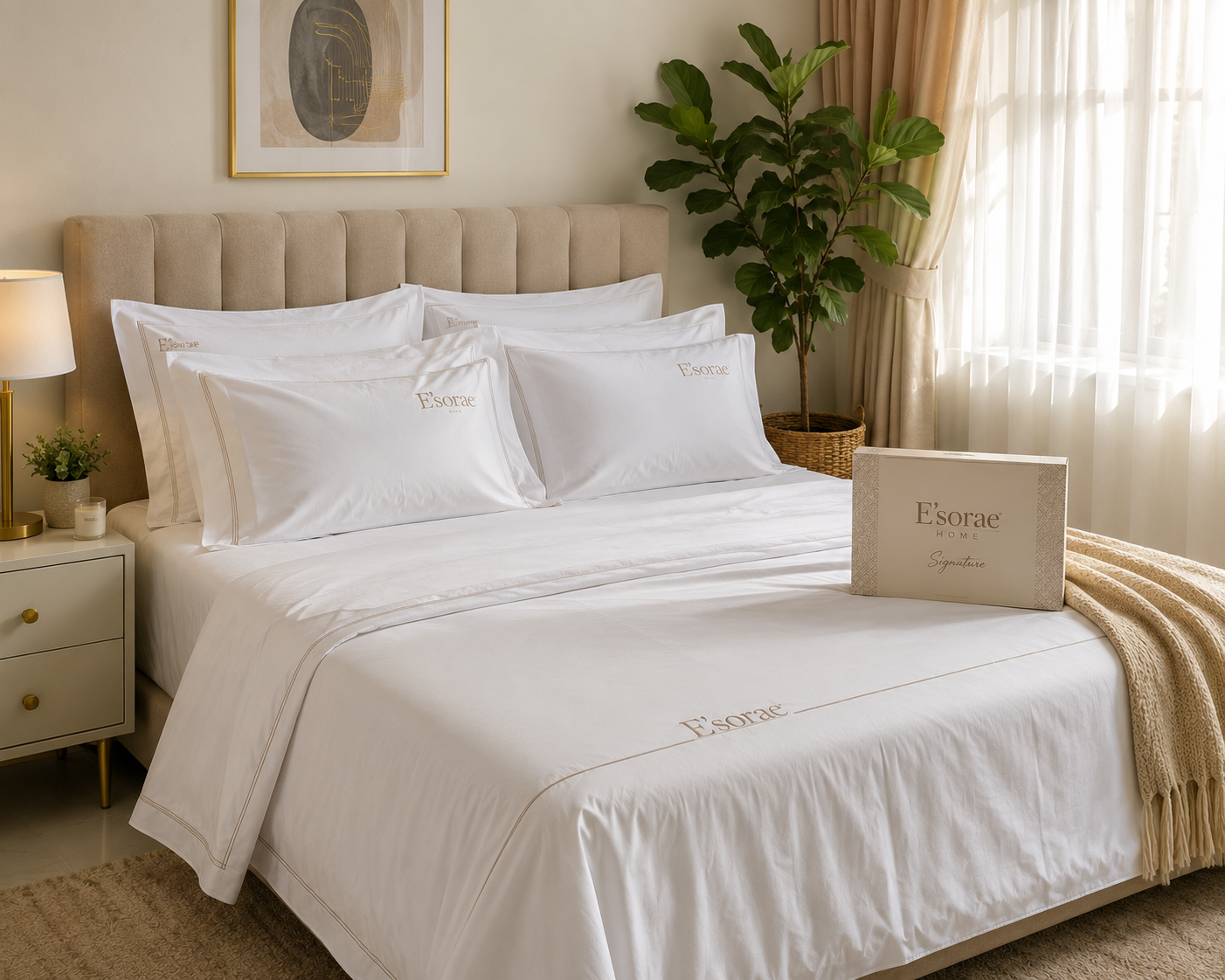
Walk through any bedding stall in Lagos and start counting how many packages claim “Egyptian cotton.” You’ll run out of fingers before you leave the first aisle. Now the awkward part. Most of those labels are lying to you. Real Egyptian cotton is scarce. Genuinely scarce, not marketing scarce. It makes up only a small sliver of the cotton grown worldwide, and that’s the whole reason authentic 100% Egyptian cotton bedding costs what it costs. It’s also why fakes are everywhere. Once a name starts selling, everybody borrows it. After fifteen-plus years in this business, the question we get asked most isn’t what to buy. It’s “how do I know I’m not being cheated?” Fair. So that’s what this guide is really about. What makes the fibre special, how to check before your money leaves your hand, and whether Egyptian cotton even makes sense in our heat. Short answer on that last one: yes, more than you’d expect.
What Is Egyptian Cotton, Really?
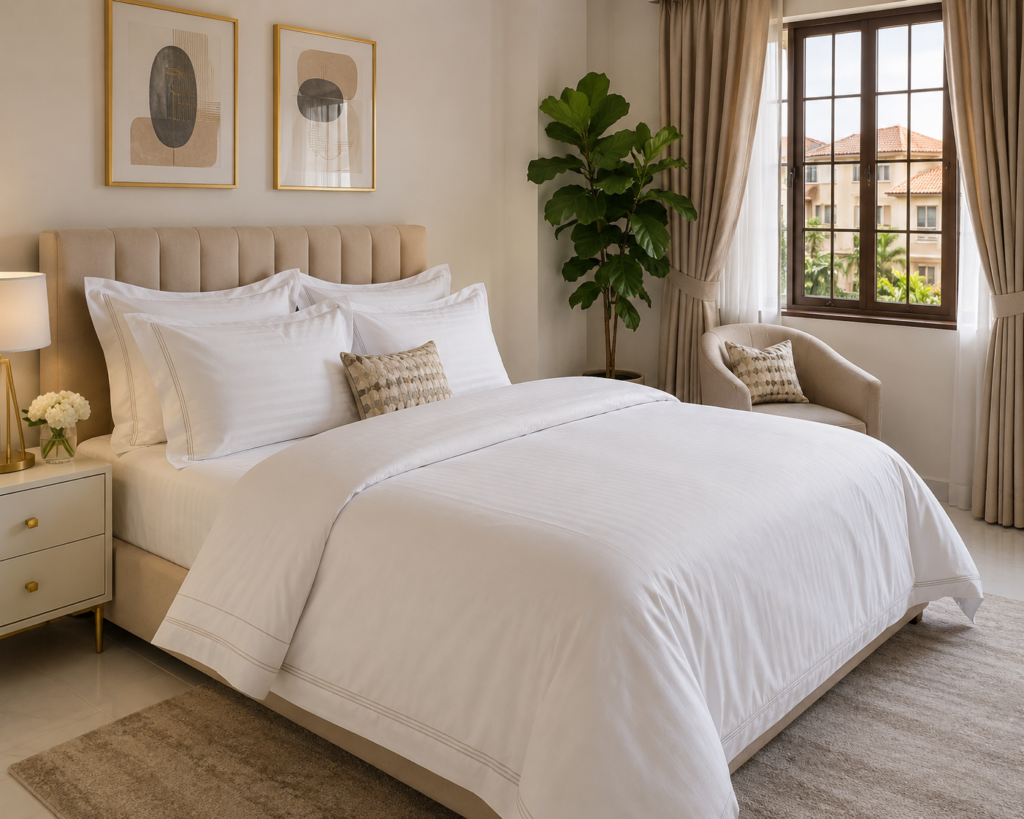
If you only read one paragraph, read this one. Egyptian cotton is an extra-long staple (ELS) cotton, grown traditionally along the Nile River Valley. Its fibres run longer, finer and stronger than ordinary cotton, and that extra length is what spins into the smooth, tough yarn behind genuinely soft Egyptian cotton sheets. Everything else in this guide is really just a footnote to that. The plant itself is usually Gossypium barbadense. Different species from the upland cotton in most everyday sheets. Same family, very different animal, the way a danfo and a G-Wagon are both technically vehicles. Climate does a lot of the heavy lifting. The Nile Delta happens to have the humidity and soil this plant loves, and countries that tried copying the recipe elsewhere got, let’s say, mixed results. And there’s a human element that gets overlooked. The cotton is traditionally picked by hand. Slow, yes. But hands keep the fibres straight and whole. Machines are faster and they break things. That trade-off shows up years later, in your bed.
What Makes Egyptian Cotton So Special?
It starts with fibre length
Short cotton fibres, when spun into yarn, leave thousands of tiny ends sticking out along the thread. You can’t see them. Your skin, unfortunately, can. Those exposed ends are the roughness you feel in cheap sheets, and they’re also where pilling starts, those little balls that show up after a few months of washing. Long fibres mean fewer loose ends. Fewer loose ends mean smooth. That’s genuinely the whole secret. No magic involved, just botany doing its quiet work.
It gets better with age, which almost nothing does
Long fibres also make stronger yarn. So a proper Egyptian cotton set can outlive three or four rounds of ordinary sheets, and instead of wearing thin it actually softens with every wash. The set you love at year five was merely nice at week one. Think about how few things in your house improve with use. Your phone doesn’t. Your car certainly doesn’t. These sheets do.
It breathes
Cotton pulls moisture away from your skin naturally, and fine Egyptian yarns can be woven light enough to stay airy. The Sleep Foundation has published plenty on how a cooler bed leads to deeper sleep. Anyone who has sweated through a still Lagos night when the light went and the generator was resting doesn’t need the research. Still, nice to know the scientists agree with us.
The colour holds
Fine, absorbent fibres drink in dye deeply and evenly. Which is why premium sheets still look rich after two years of laundry days, while the cheaper ones fade into a tired, greyish memory of whatever colour they used to be.
Egyptian Cotton vs Regular Cotton
| Feature | 100% Egyptian Cotton | Regular (Upland) Cotton | “Egyptian Cotton Blend” |
|---|---|---|---|
| Fibre length | Extra-long staple | Short to medium | Mixed, mostly short |
| Feel | Silky, softens over time | Fine at first, roughens fast | Hit or miss |
| Lifespan | 8 to 10+ years with care | 2 to 4 years | Anyone’s guess |
| Pilling | Minimal | Common | Common |
| Breathability | Excellent | Good | Depends what’s in it |
| Price | Premium | Budget to mid | Mid, usually overpriced |
| Best for | A long-term investment | Guest rooms, short stints | Honestly? Skip it |
Now do the maths people usually skip. Regular cotton wins on the price tag today, no argument. But you’ll buy it three times over before one good Egyptian cotton set gives up. Divide what you spent by the years you got, and the “expensive” option has quietly been the cheap one all along.
How to Spot the Genuine Article
Worldwide demand for Egyptian cotton is far bigger than what Egypt can actually grow. Sit with that for a moment, and every bargain “Egyptian cotton” set you’ve ever seen starts explaining itself. The Cotton Egypt Association exists partly to fight this mess, and licenses an official seal for verified products. Beyond the seal, here’s what we check ourselves:
- Read the label word for word. You want “100% Egyptian cotton.” Not “Egyptian cotton blend.” Not “Egyptian quality.” Not “Egyptian style.” Those are all polite ways of saying no.
- Ask where the cotton comes from. A serious retailer can answer. A vague answer is also an answer.
- Trust your hands. The real thing feels cool, smooth and substantial. Not slippery like polyester, not stiff like over-starched market sheets.
- Sanity-check the price. A “1,000 thread count Egyptian cotton set” at giveaway money is neither of those things. If they must lie, they should at least pick one.
- Buy from people with something to lose. A physical store. Reviews with faces. A returns policy. Sellers who vanish don’t honour anything.
One trick from our showroom, and you’re welcome to try it on us: crumple a corner of the sheet in your fist, hold for a few seconds, open. Genuine cotton wrinkles softly and relaxes. Polyester barely creases. Cheap cotton creases like exam paper. The vendor shouting “na original” is not part of the test.
The Thread Count Trap
Thread count might be the most successful piece of marketing in bedding history. It also tells you almost nothing on its own.
All it measures is threads per square inch. But quality fibre at 400 beats mediocre fibre at 1,000 every single time, and those sky-high numbers are usually a counting trick anyway. Manufacturers twist thin, weak strands together into multi-ply yarn, then count each strand separately. What lands on your bed is a heavier, stuffier sheet wearing an impressive number like a borrowed agbada.
What actually matters, in order: fibre quality first. Then weave, crisp percale or silky sateen, purely your preference. Then finishing. Thread count comes last, and anything between 200 and 600 is perfectly respectable.
Does It Make Sense for Nigeria’s Heat?
Picture your worst night this year. Humid, no breeze, NEPA took the light, and the gen is off because fuel is fuel. What makes that night unbearable isn’t only the heat. It’s synthetic bedding holding that heat, plus your own sweat, right against your skin like a bad decision. Egyptian cotton does the opposite. It breathes, and it moves moisture away from you.
Hot sleeper? Go percale. It has that crisp, cool, hotel-bed snap when you slide in. Then pair it with a duvet quilt you can kick off at 2am and drag back up once the AC finally wins.
Mistakes We See Buyers Make
Worshipping thread count. Already covered. A 400-count in real long-staple cotton beats a 1,000-count blend.
Ignoring the weave. Percale if you sleep hot, sateen if you love a silky drape. Nobody in the shop tells you this, and it changes everything about how the bed feels.
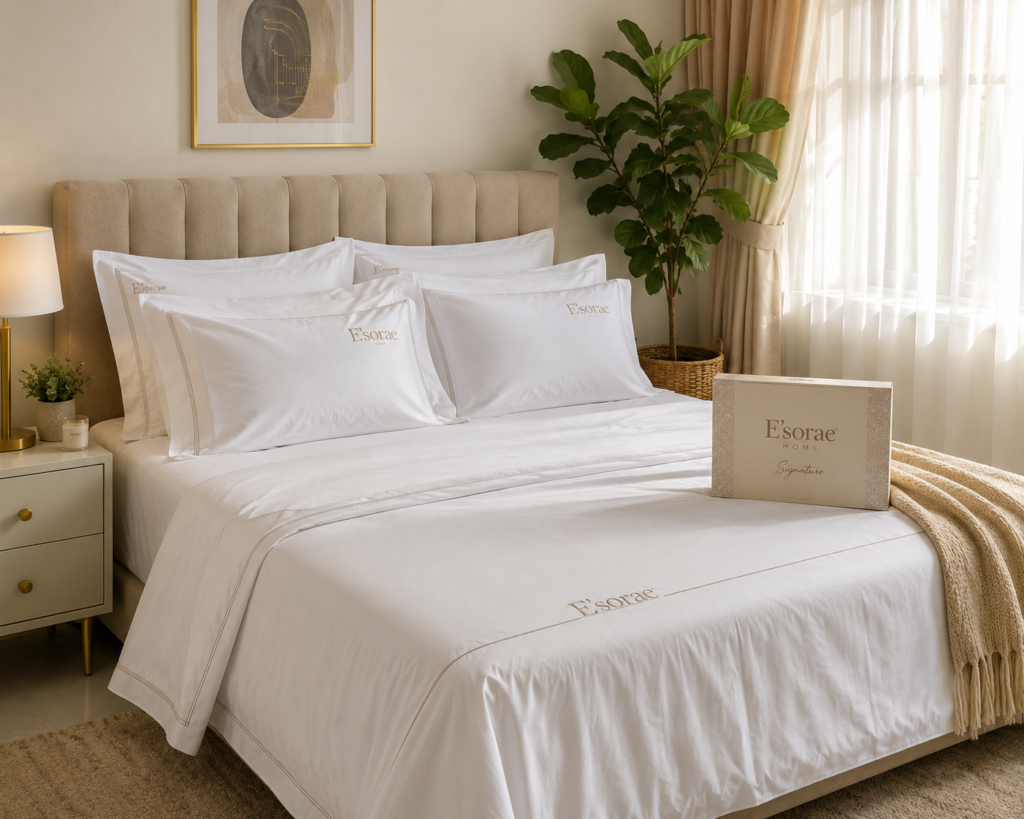
Beautiful sheets, terrible pillow. Luxury sheets over a flat, lumpy pillow is premium fuel in a faulty engine. Match your bedding with a pillow that suits how you actually sleep, whether that’s side, back or stomach.
Skipping protectors. In our humidity, a decent mattress and pillow protector is the quiet hero standing between sweat, dust and your investment.
Buying from sellers who can’t answer questions. If they can’t tell you the cotton’s origin, the weave, or how to wash it, they don’t know what they’re selling. So why would you buy it?
Caring for Egyptian Cotton Sheets
- Wash cool or warm, never hot, with a mild detergent.
- No bleach. And skip fabric softener too. It coats the fibres and smothers the very breathability you paid for.
- Line-dry in shade or tumble on low, and take the sheets out promptly. Wrinkles set while sheets sit.
- Keep two or three sets in rotation so no single set carries the whole load.
Our full laundry care guide goes deeper if you enjoy that sort of thing.
So, Is Egyptian Cotton Worth It?
You’ll spend something like a third of your life lying on your sheets. A third. Eight hours a day, if you’re lucky. Harvard Health researchers keep finding links between sleep quality and nearly every measure of health there is, and yet most of us have put more thought into our phone cases than the fabric we sleep on every night.
Genuine Egyptian cotton earns its price the boring way. Softness that grows. Colours that hold. Sheets still on your bed years after the cheap ones became cleaning rags. And in Nigeria’s heat, the breathability alone would make the case by itself.
The only real risk is buying a fake. So read labels slowly, ask questions, buy from people who will still be around next year, and 100% Egyptian cotton bedding turns into one of the very few luxuries you’ll actually use every single night. Not the perfume for special occasions. The everyday one.
Come Feel the Difference
We’ve spent fifteen years and counting helping Nigerian homes sleep better, and frankly we’d rather you touch the fabric than take our word for anything. Browse the luxury Egyptian cotton bedding collection online, start with the Signature Bedding Collection, or walk into any of our stores and do the crumple test yourself. We won’t be offended. And if you’re not sure where to start, talk to our sleep specialists. No pressure, just honest answers from people who argue about weaves for a living.