


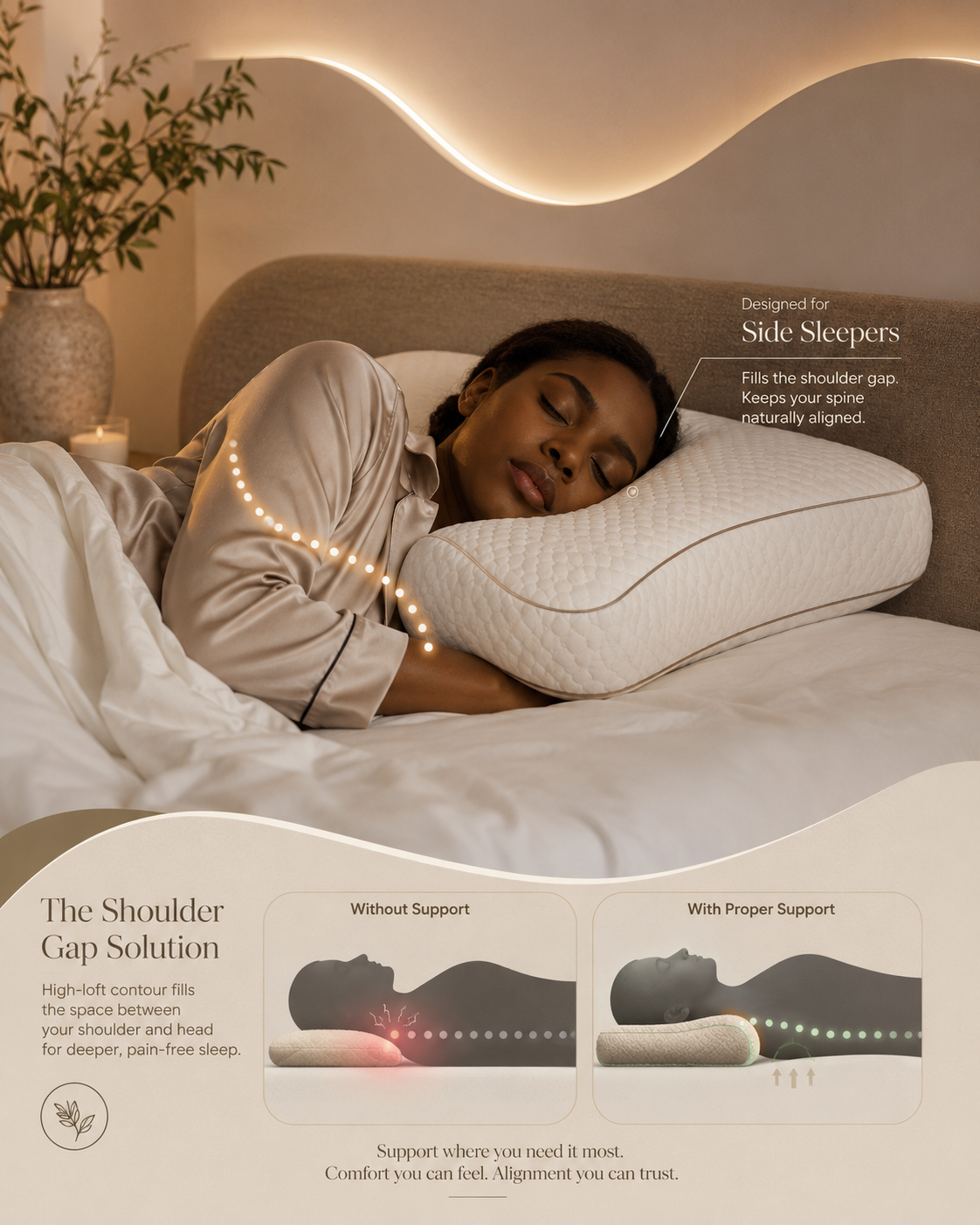
You’ve bought the good mattress. Dimmed the lights, put the phone away, maybe even splashed out on blackout curtains. And you still wake up with a stiff neck, a dead arm, or that dull ache right between your shoulder blades. Most of the time, that’s not your mattress talking. It’s your pillow.
Getting pillows for comfortable sleep right isn’t about how plush or Instagram-worthy they look on the bed. It’s about whether your neck, shoulders, and spine actually get to switch off for the night. Below, we’ll go through how to pick a pillow that matches your body, your sleep position, and Nigeria’s heat and humidity and the mistakes that trip most shoppers up.
Why Your Pillow Matters More Than You Think
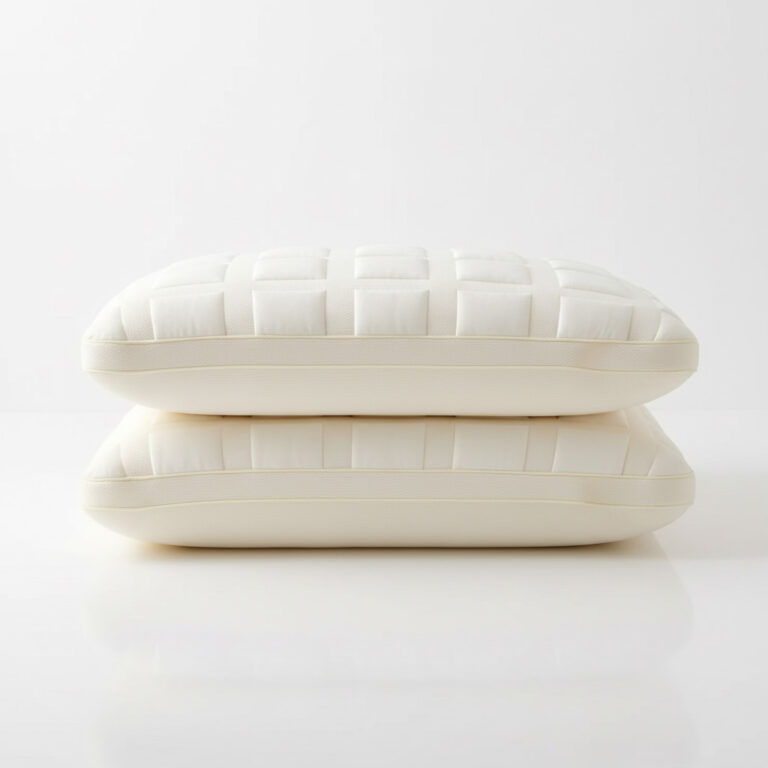
A pillow really only has one job: hold your head, neck, and spine in a straight, neutral line for six to eight hours while everything else shuts down. That’s why choosing the best pillows for comfortable sleep matters. When your pillow keeps your body in proper alignment, your muscles can finally relax. Get it wrong, and your neck spends the whole night at an angle it was never built for, leaving you stiff, sore, and tired the next morning.
It’s easy to underestimate how many people this affects. Sleep Foundation puts the number of adults dealing with neck pain at close to 10%, and around 70% of people with ongoing neck pain also say their sleep quality suffers because of it. Pain disrupts sleep, poor sleep posture feeds the pain, and the cycle keeps going.
Here’s the part worth holding onto, though: choosing one of the best pillows for comfortable sleep can genuinely help break that cycle by keeping your neck aligned with your spine. It’s not a miracle fix, and it won’t undo years of bad posture overnight, but it’s one of the simplest, most affordable, and fastest changes you can make to improve the quality of your sleep.
Signs You’re Using the Wrong Pillow
Before you go shopping for the best pillows for comfortable sleep, it’s worth checking whether your current pillow is actually the culprit. A few telltale signs to watch for include:
- You wake up with a stiff or sore neck more mornings than not
- Your arm or hand goes numb or tingly overnight
- Headaches show up soon after you get out of bed, then fade
- You’re constantly flipping, folding, or fluffing the pillow mid-sleep
- It looks flat, lumpy, or clearly past its prime
- Shoulder pain that eases once you’ve been up and moving for a while
If any two of these sound familiar, your pillow probably isn’t doing you any favours.
How to Choose Pillows for Comfortable Sleep by Sleep Position
There isn’t really a single “best pillow” it almost entirely comes down to how you sleep. Here’s how the three main positions differ, and why one pillow rarely works for all of them.
Side Sleepers
Of the three sleeping positions, side sleepers typically benefit most from the best pillows for comfortable sleep with a higher loft. There’s a bigger gap between your head and the mattress at shoulder level, so a flat pillow lets your head dip down, while one that’s too tall pushes it upward. Neither is comfortable, and both can strain your neck. The right pillow fills that gap, keeping your head, neck, and spine in proper alignment throughout the night.
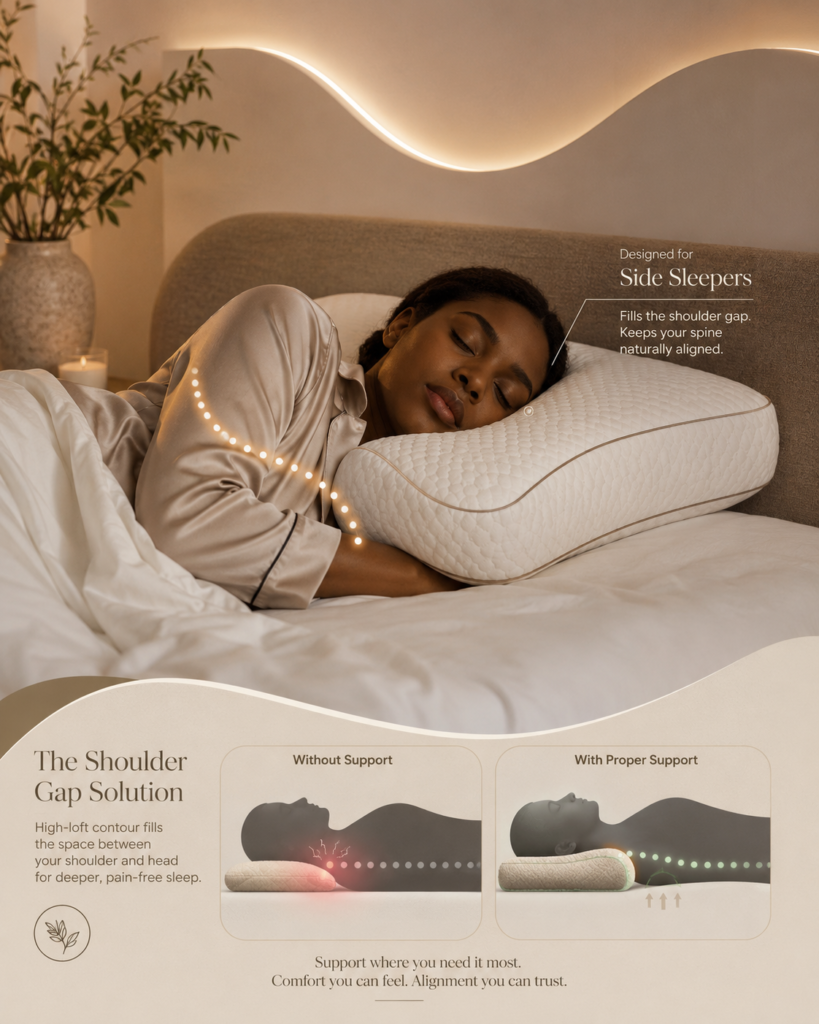
What actually works: a firm pillow with 4 to 6 inches of loft that fills that shoulder gap completely, without collapsing halfway through the night. Memory foam and contoured shapes tend to hold up best here.
Take a look at Esorae Home’s side sleeper pillow collection if this sounds like you.
Back Sleepers
Back sleepers should choose one of the best pillows for comfortable sleep with a medium or lower loft that gently supports the natural curve of the neck without pushing the head too far forward. Research suggests that a traditional rectangular memory foam pillow often provides better comfort and alignment than overly contoured designs, making it an excellent choice for restful, pain-free sleep.
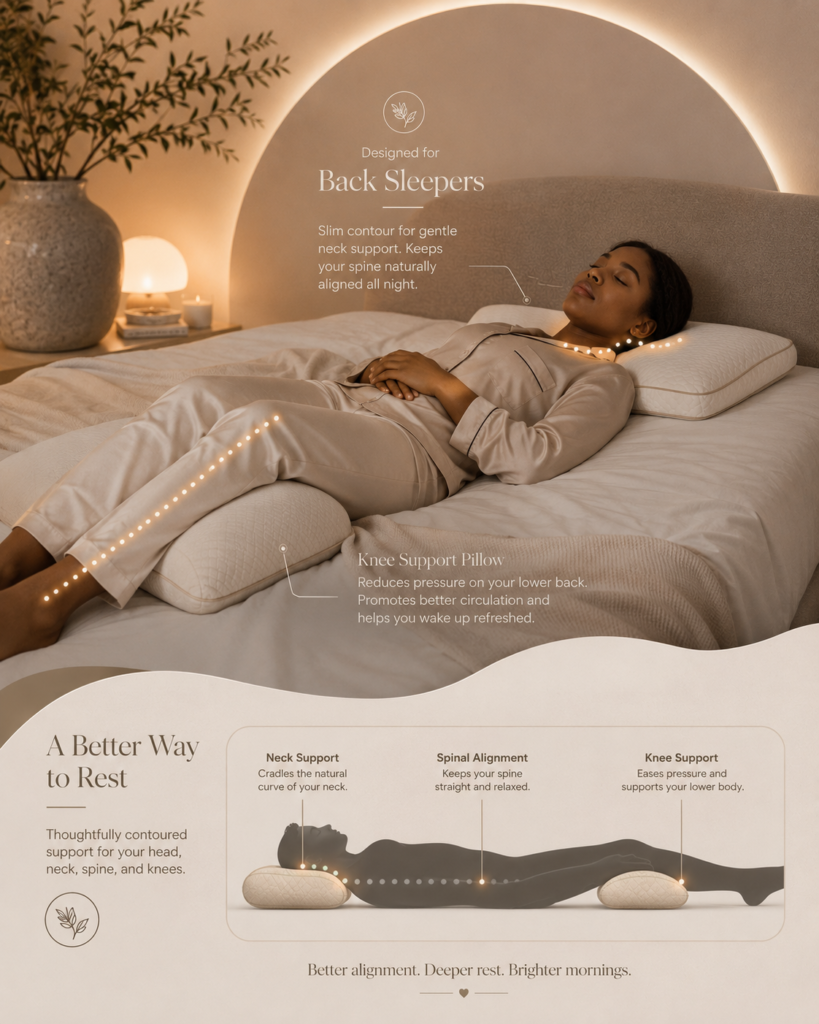
What actually works: medium loft, sometimes with a slight dip in the centre, occasionally paired with a slim pillow under the knees to take pressure off the lower back too.
The back sleeper pillow range is built with exactly this in mind.
Stomach Sleepers
Stomach sleeping places the most strain on the neck of all three sleep positions because your head remains turned to one side for hours. If you sleep this way, choosing one of the best pillows for comfortable sleep means opting for the flattest, softest pillow possible sometimes using little to no pillow under your head at all. This helps reduce neck strain and encourages better spinal alignment while you sleep.
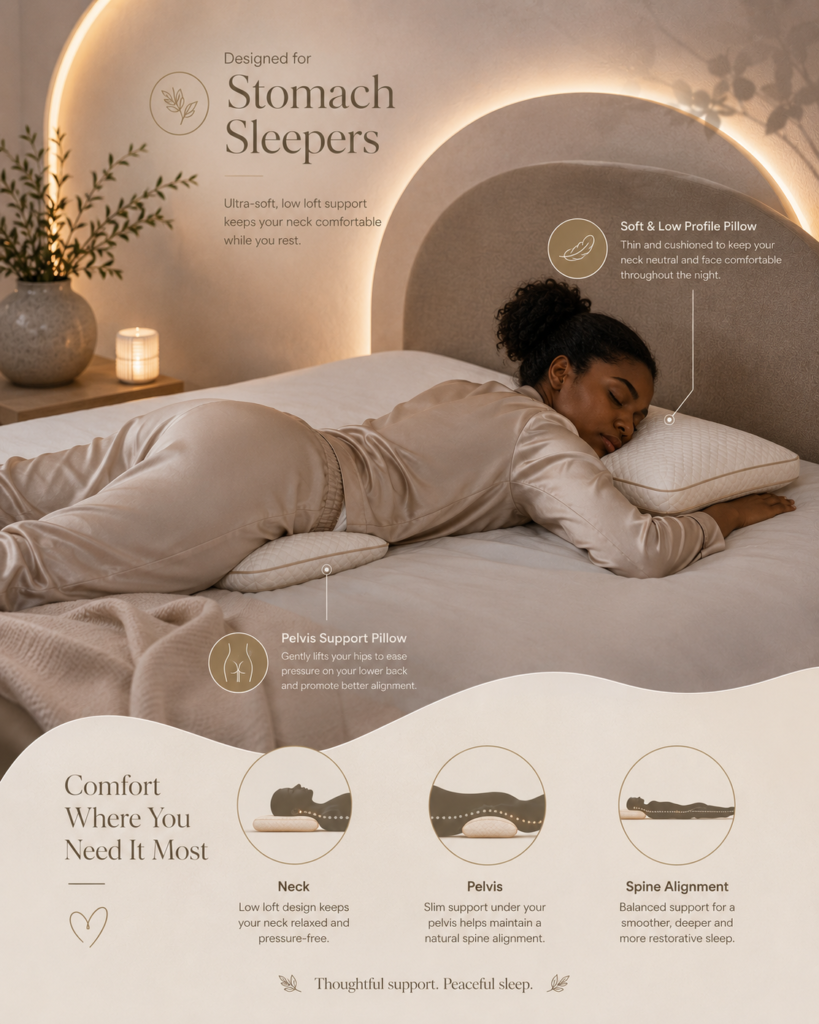
What actually works: something thin and soft, occasionally swapped out entirely for a slim pillow under the pelvis instead, which helps stop the lower back from arching too much.
Have a look at the stomach sleeper pillow selection for a lower-profile option.
Quick Answer: Pillow Loft by Sleep Position
| Sleep Position | Recommended Loft | Firmness | Key Goal |
|---|---|---|---|
| Side sleeper | High (4–6 in) | Firm | Fill shoulder gap |
| Back sleeper | Medium (3–4 in) | Medium | Support neck curve |
| Stomach sleeper | Low (1–3 in) | Soft | Minimise neck turn |
Pillow Materials Compared
What a pillow is filled with affects more than just how it feels under your head. The material plays a major role in breathability, support, and durability. Choosing the best pillows for comfortable sleep means selecting a filling that suits both your sleep preferences and your environment something that’s especially important in Nigeria’s warm, humid climate, where heat retention and moisture can affect your sleep quality.
| Material | Support Level | Breathability | Best For |
|---|---|---|---|
| Memory foam | High, contouring | Moderate | Neck pain, side/back sleepers |
| Latex | High, responsive | Good | Hot sleepers, durability |
| Down/feather | Soft, adjustable | Good | Stomach sleepers, softer feel |
| Microfibre | Medium | Good | Budget-friendly, allergy-conscious buyers |
| Buckwheat | Firm, adjustable fill | Excellent | Custom loft, cooling |
If you’re not sure where to start, memory foam is a fairly safe default some research suggests it eases neck pain more effectively than feather pillows do.
Best Comfortable Sleeping Pillows for Nigerian Homes
Most guides to the best pillows for comfortable sleep are written with cooler climates in mind, and it shows. In cities like Lagos, Abuja, and Port Harcourt where heat and humidity are part of everyday life a pillow that seems perfect on paper can become uncomfortable by 2 a.m. if it traps heat. Choosing a breathable pillow designed to stay cool can make a significant difference in your sleep quality, especially in Nigeria’s tropical climate.
What to Prioritise in a Tropical Climate
- Breathable covers cotton or bamboo-blend fabric over synthetic material
- Moisture-wicking fill latex and ventilated foam beat dense feather here
- Washable covers non-negotiable given the humidity
- Mould resistance especially during rainy season, when everything stays damp longer
For Hotels and Airbnb Hosts
Guests notice an uncomfortable pillow faster than almost any other detail in a room. Investing in the best pillows for comfortable sleep is a simple way to improve guest satisfaction and earn better reviews. An easy solution is to provide one firm and one soft pillow in every room, giving side, back, and stomach sleepers the support they need without having to guess their preferences.
Cervical Pillows for Neck Pain: What to Know
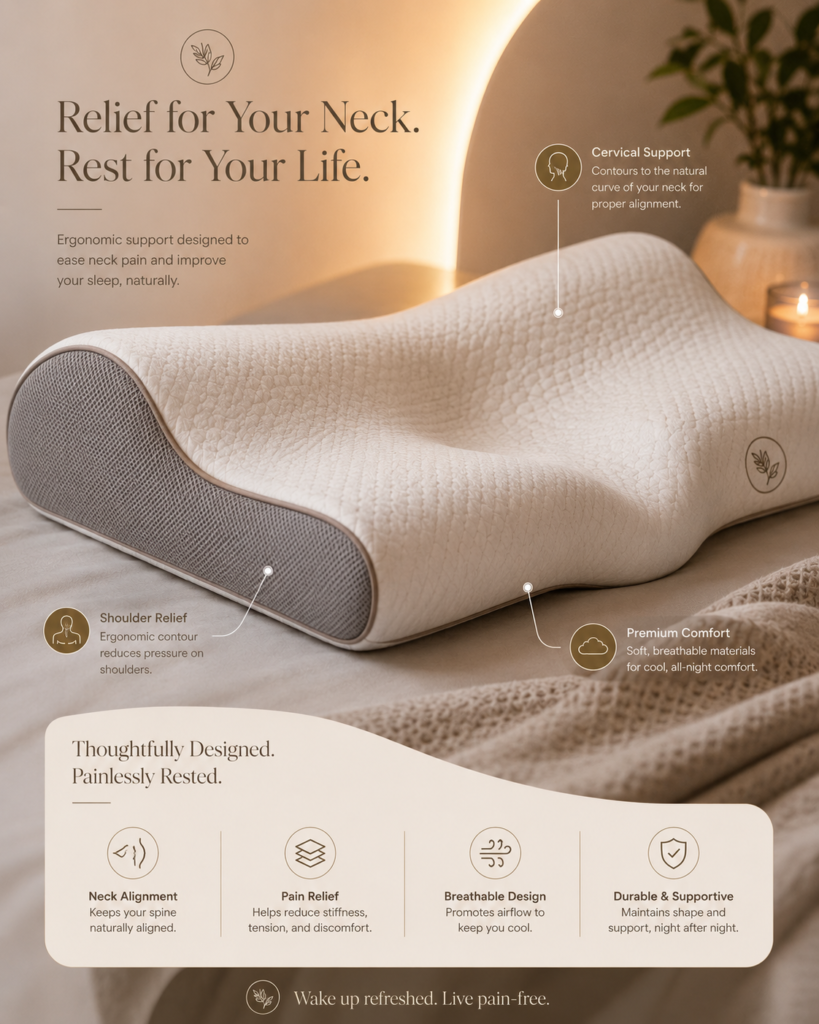
A cervical pillow for neck pain isn’t flat like a standard pillow it’s contoured, usually with a raised edge or a curved centre shaped to cradle the neck’s natural curve rather than fight against it.
Who Should Consider One
- Anyone who wakes up stiff more often than not
- People recovering from whiplash or a neck strain
- Office workers dealing with “tech neck” after long hours hunched over a screen
- Older adults managing arthritis-related neck discomfort
Common Mistakes When Buying a Neck Support Pillow
- Shopping on price alone. The cheapest option rarely holds its shape past a few months.
- Ignoring your sleep position. A pillow perfect for a back sleeper can genuinely strain a side sleeper’s neck.
- Never replacing old pillows. Most lose real support within a year or two of regular use, even if they still look fine.
- Confusing softness with support. They’re not the same thing a good pillow needs both.
- Skipping the test. Lie down on it before buying if you can. Looks can be deceiving.
Pillow Buying Checklist
Quick checklist before you check out:
- I know my primary sleep position (side, back, or stomach)
- I’ve picked a loft height that matches that position
- The material suits Nigeria’s climate (breathable, washable)
- It’s firm enough to actually support, not just soft enough to sink into
- The cover comes off and goes in the wash
- There’s a reasonable trial or return policy attached
Expert Tips for Better Sleep
- Replace your pillow every year or two sooner if it’s visibly flat or lumpy.
- Don’t expect a pillow to fix a bad mattress. Even the best pillow can only do so much on top of a sagging base.
- Check your alignment with a photo. Lie in your usual sleep position and get someone to snap a picture of your neck line it should sit straight, not tilted up or down.
- Wash pillow covers weekly during Nigeria’s hotter, more humid stretches to keep allergens and moisture in check.
- Pair positions with the right add-ons back sleepers, for instance, often do better with a slim pillow under the knees in addition to their head pillow.
Frequently Asked Questions
What is the best pillow for comfortable sleep?
It depends on how you sleep. Choosing the best pillows for comfortable sleep starts with matching the pillow to your sleep position. Side sleepers generally need a firm, high-loft pillow, back sleepers benefit from a medium-loft option, and stomach sleepers usually sleep best with a thin, soft pillow that minimizes strain on the neck.
How do I know if my pillow is causing neck pain?
If you’re regularly waking up with a stiff neck, tingling in your arm, or a headache that fades once you’re up and moving, your pillow’s height or firmness may not match your sleep position. Switching to one of the best pillows for comfortable sleep can improve spinal alignment, reduce pressure on your neck and shoulders, and help you wake up feeling more rested.
How often should I replace my pillow?
Most pillows for comfortable sleep should be replaced every one to two years to maintain proper support and hygiene. High-quality memory foam or latex pillows, however, can often last longer with proper care while continuing to provide excellent comfort and spinal support.
Are memory foam pillows good for neck pain?
Generally, yes. Memory foam contours to the shape of your head and neck, and it’s been shown to potentially ease neck pain more than feather pillows do.
What loft height is best for side sleepers?
Somewhere around 4 to 6 inches enough to fill the gap between your ear and shoulder so your spine stays straight.
Conclusion
Picking the right pillows for comfortable sleep stops being guesswork once you know your sleep position and what it actually needs. Side sleepers want height and firmness. Back sleepers want moderate support that follows the neck’s curve. Stomach sleepers want something soft and low. And if neck pain’s already part of your routine, a proper cervical pillow can make a real difference within a handful of nights.
At Esorae Home, our pillow range is built around that exact idea matching real sleep positions to real support, in materials that actually hold up in Nigeria’s climate. If tonight’s the night you finally deal with that stiff neck, take a look at our side sleeper, back sleeper, and stomach sleeper collections, or get in touch with our team for a recommendation tailored to you.
Ready for better sleep? Shop Esorae Home’s pillow collection today and give your neck the support it’s been missing.