


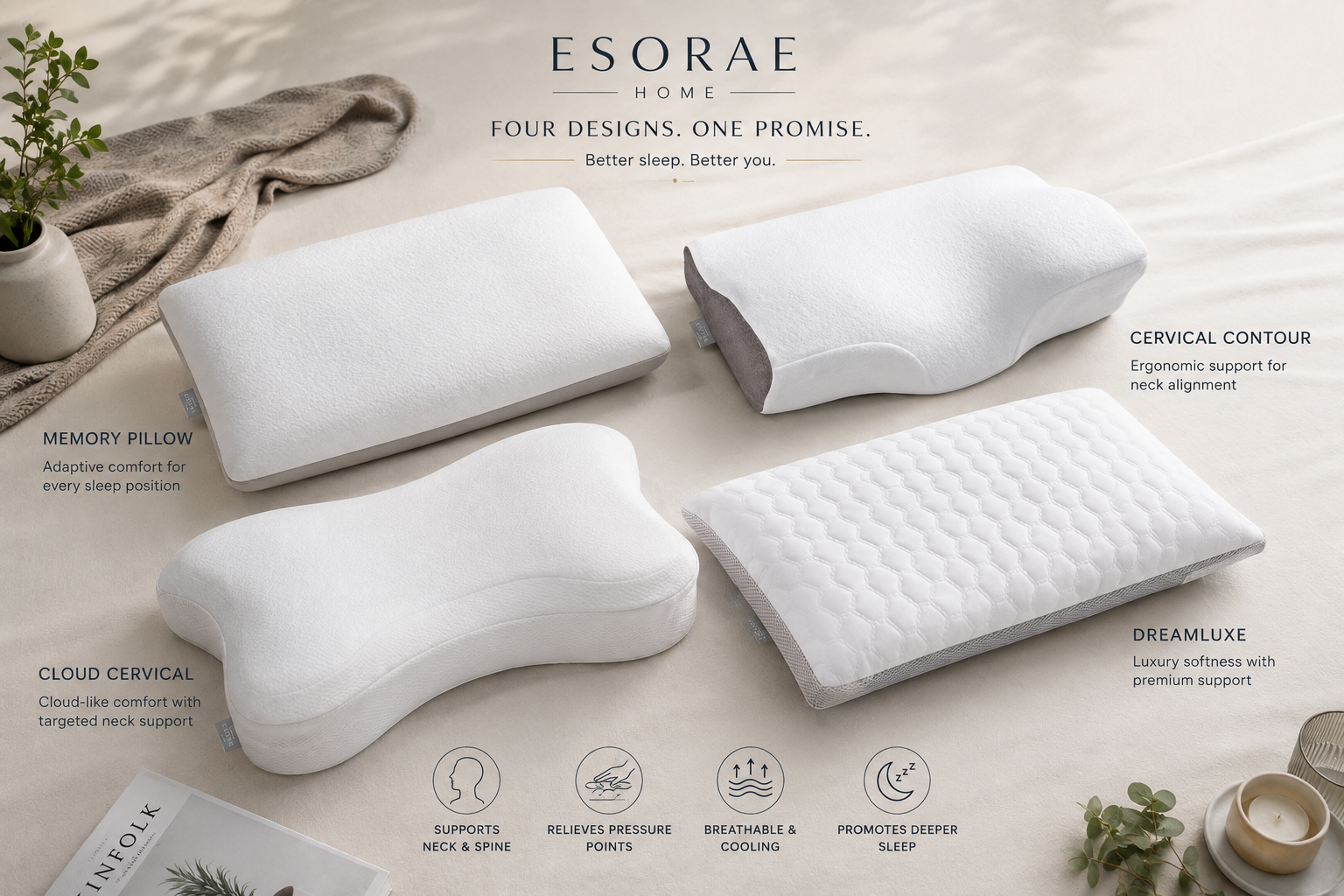
If you wake up most mornings rubbing a stiff neck, the problem might not be your mattress. It might be the pillow underneath your head. A memory pillow is designed to solve exactly this: it molds to the shape of your head and neck, keeps your spine in a neutral line, and slowly releases that shape once you get up.
This guide breaks down how memory pillows work, who benefits most from them, and how to choose one that actually fits your sleep position, whether you’re shopping for your own bedroom or furnishing rooms for guests.
What Is a Memory Pillow?
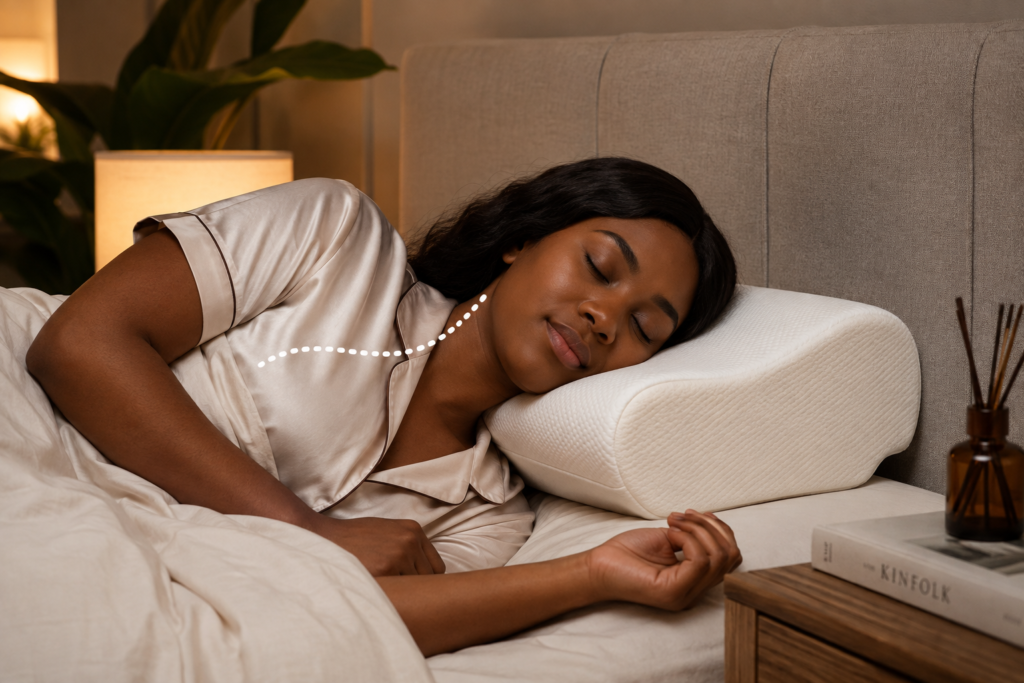
A memory pillow is a pillow filled with viscoelastic memory foam, a material originally developed by NASA to absorb impact and distribute pressure evenly. Unlike feather or fiber pillows, memory foam responds to body heat and weight. It softens where your head presses down and stays firmer everywhere else.
That behavior matters more than it sounds. Most neck stiffness comes from a pillow that’s too flat, too high, or too soft to hold your head level with your spine through the night. Sleep researchers and physical therapists widely point to neutral spinal alignment as the real goal, the head resting roughly level with the shoulders, with the neck’s natural curve supported rather than flattened or overextended. A memory pillow is built around that exact principle.
Quick answer: A memory pillow is a foam pillow that contours to your head and neck, redistributes pressure, and helps maintain spinal alignment while you sleep, making it especially useful for side sleepers, back sleepers, and anyone dealing with neck or shoulder pain.
How a Memory Pillow Supports Better Sleep
Sleep quality and neck posture are more connected than most people realize. Public health researchers link insufficient or poor-quality sleep to a higher risk of heart disease, stroke, type 2 diabetes, and reduced daytime concentration. U.S. health surveillance data from the CDC illustrates the scale of the problem: roughly 30% of adults get less than seven hours of sleep on average, a figure that has held steady for over a decade. While that data reflects U.S. populations, it underscores a global reality small, fixable factors like pillow support genuinely move the needle on sleep quality.
Here’s why the material matters:
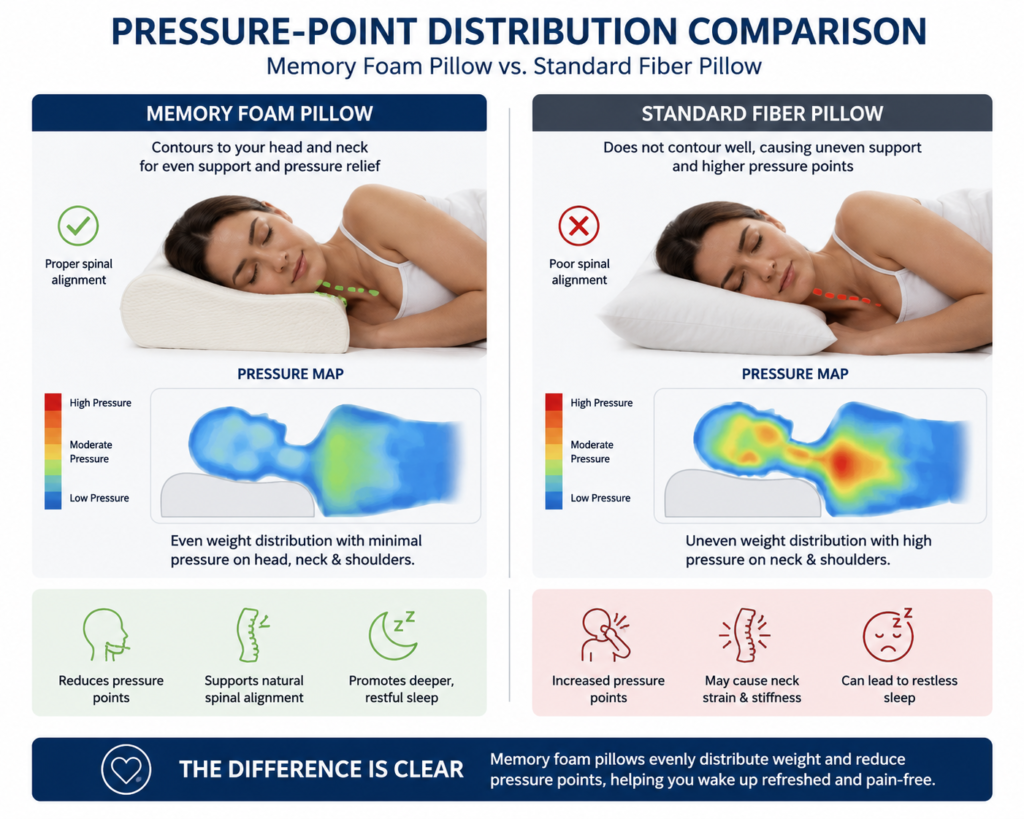
- Pressure relief: Memory foam spreads your head’s weight across a wider surface instead of concentrating it at a few pressure points, which is why side sleepers often feel less ear and jaw discomfort.
- Spinal alignment: A contoured or medium-loft memory pillow keeps your cervical spine in its natural curve rather than pushing your chin toward your chest or tilting your head backward.
- Motion isolation: The foam slowly returns to shape, so it doesn’t go flat the moment you shift position, unlike compressed fiber-fill pillows.
- Temperature response: Because the foam softens with body heat, it adapts to your specific head shape rather than offering one fixed contour for everyone.
A 2020 study published in the International Journal of Environmental Research and Public Health found that memory foam and latex pillows offered good neck support and improved sleep quality compared with standard fiber pillows, one of the reasons physiotherapists frequently recommend them for patients with chronic neck tension.
Memory Pillow vs. Regular Pillow: Key Differences
| Feature | Memory Pillow | Regular (Fiber/Down) Pillow |
|---|---|---|
| Support | Contours to head and neck shape | Compresses unevenly over time |
| Spinal Alignment | Maintains neutral cervical curve | Can allow the head to sink or tilt |
| Durability | Retains shape for 2–3+ years | Flattens within 6–12 months |
| Pressure Relief | High, distributes weight evenly | Moderate, concentrates at contact points |
| Best For | Neck pain, side/back sleepers | Stomach sleepers, softer feel preference |
| Maintenance | Spot clean, removable cover | Often fully washable |
Choosing the Right Memory Pillow for Your Sleep Position
Your sleep position determines the loft (height) and firmness you need. Getting this wrong is the single most common reason people say a “good” pillow still left them sore.
Side Sleepers
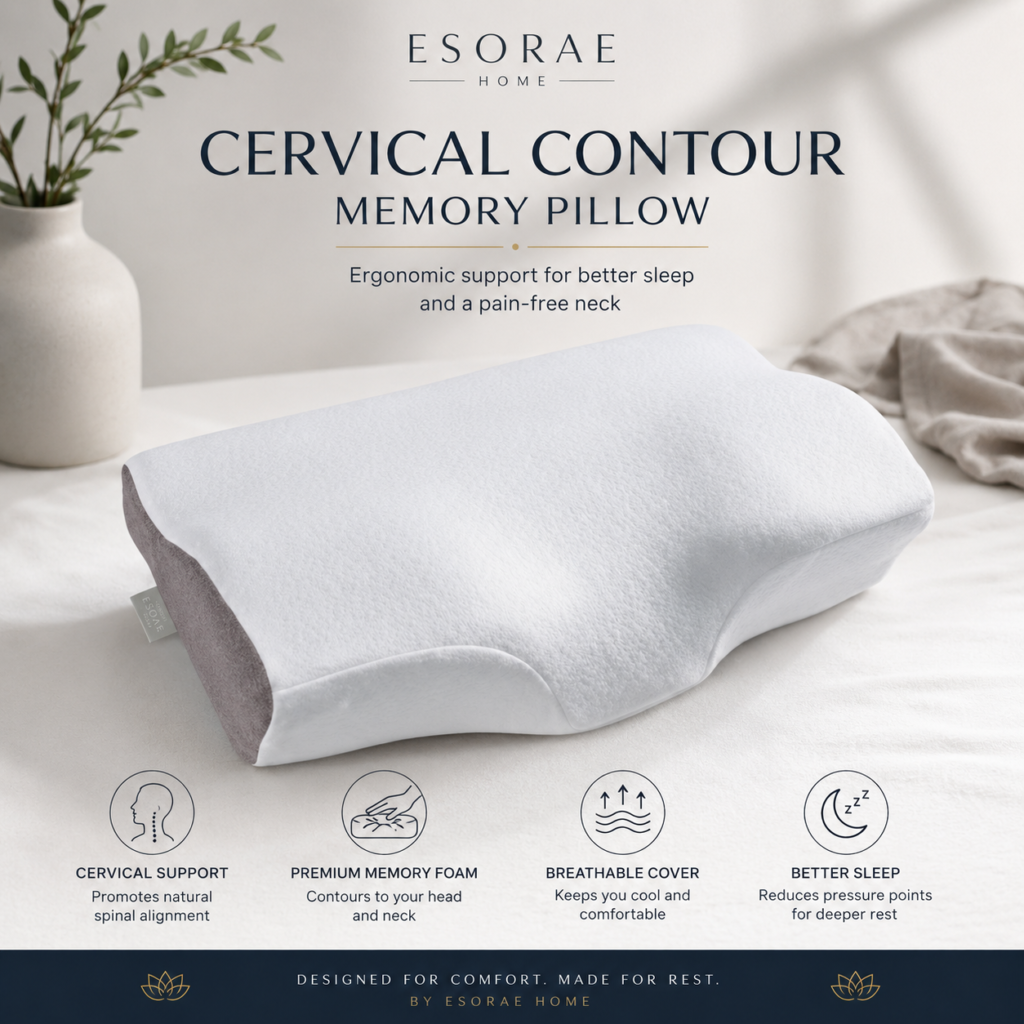
Side sleepers need a higher loft to fill the gap between the ear and the mattress, keeping the neck level with the spine. A firmer memory pillow, like Esorae Home’s Cervical Contour Memory Pillow, holds that height without collapsing under the weight of the head and shoulder.
Back Sleepers
Back sleepers generally do best with a medium-loft pillow that supports the natural curve of the neck without pushing the head too far forward. This is where a well-shaped Memory Pillow or Cloud Cervical Memory Pillow earns its reputation.
Stomach Sleepers
Stomach sleeping puts the most strain on the neck, since the head stays turned to one side for hours. A low-loft, softer option or a hybrid down-alternative style reduces that twist better than a tall contoured pillow.
Combination Sleepers
If you shift positions overnight, look for a medium-loft memory pillow with slightly rounded edges so it adapts reasonably well across positions, such as Esorae Home’s DreamLuxe Memory Pillow.
Orthopedic Memory Pillows for Neck Support
An orthopedic memory pillow goes a step further than a standard memory pillow by adding a shaped contour often a butterfly or cervical curve specifically engineered to cradle the neck.
Who Benefits Most
- People recovering from whiplash, cervical strain, or a stiff neck
- Office workers who spend long hours hunched over a desk or laptop
- Anyone diagnosed with mild cervical spondylosis or chronic tension headaches
- Older adults who need firmer, more stable neck support
Expert Tip
Physical therapists often recommend testing pillow height while lying on your side in a mirror: your nose should line up with the center of your body, not tilt up or down. If it tilts, your loft is wrong for your frame, not necessarily your pillow type.
Common Mistakes People Make When Buying a Memory Pillow
- Choosing based on softness alone. A pillow that feels plush in-store may offer too little support after a full night of body heat softening the foam further.
- Ignoring sleep position entirely. The “best-rated” pillow online may be wrong for you if it was designed for a different sleep position than yours.
- Keeping a pillow too long. The National Sleep Foundation recommends replacing pillows every one to two years, since foam support degrades even when it still looks fine.
- Skipping the break-in period. Memory foam often needs one to two weeks before it feels fully broken in, don’t judge it after night one.
- Buying the wrong size for your bed or frame. A pillow that’s too wide or narrow for your shoulders throws off alignment regardless of material quality.
Memory Pillows for Hotels and Airbnb Hosts
Guest reviews live and die on sleep quality, and pillows are one of the cheapest upgrades with the highest visible impact. Hospitality operators typically look for three things: consistent firmness across units, durability under frequent laundering, and hypoallergenic materials to reduce guest complaints.
Esorae Home supports bulk and wholesale ordering for hotels, short-let apartments, and Airbnb hosts through its hospitality supply program, making it straightforward to standardize pillow quality across multiple rooms or properties at once.
Buying advice for hosts:
- Stock a mix of medium-loft memory pillows to suit the widest range of guest sleep positions
- Pair every pillow with a removable, washable protector to extend its usable life
- Rotate and replace pillows on a fixed annual schedule rather than waiting for visible wear
Caring for Your Memory Pillow
Memory foam pillows generally shouldn’t go through a washing machine as a solid block, this can break down the foam structure. Instead:
- Use a removable, machine-washable outer cover and wash it every one to two weeks
- Spot-clean the foam core with a damp cloth and mild detergent, then air-dry fully before use
- Air out the pillow in indirect sunlight occasionally to reduce moisture buildup, which matters in Nigeria’s humid coastal climate
- Avoid direct heat sources, which can degrade the foam’s cell structure over time
Buying Guide: What to Look for Before You Purchase
Before adding a memory pillow to your cart, run through this checklist:
- Loft height: matched to your primary sleep position
- Firmness: firmer for side sleepers, softer-medium for back and stomach sleepers
- Cover material: breathable, removable, and machine-washable
- Certifications: look for hypoallergenic or CertiPUR-type foam safety standards where listed
- Warranty or trial period: a longer trial reduces the risk of buying the wrong loft
- Climate suitability: cooling-infused foam performs better in Nigeria’s warmer, humid regions
Esorae Home’s full pillow collection is organized by sleep position and support need, which makes it easier to narrow choices without guessing.
Final Thoughts
A memory pillow isn’t a luxury add-on. It’s one of the few sleep products with a direct, physical effect on how your neck and spine feel every single morning. Match the loft and firmness to how you actually sleep, replace it on schedule, and the improvement in sleep quality tends to show up faster than most people expect.
If you’re ready to stop waking up sore, explore Esorae Home’s range of memory pillows built for side sleepers, back sleepers, and anyone who needs real neck support, including orthopedic and cervical options designed for Nigerian homes and hospitality spaces alike. Shop the full pillow collection or get in touch for guidance on choosing the right one.
FAQs
1. What is a memory pillow used for?
A memory pillow supports your head and neck while helping maintain proper spinal alignment during sleep.
2. Is a memory pillow good for neck support?
Yes. Its contouring design can help reduce pressure and provide consistent neck support.
3. What is the best memory pillow for neck support?
Look for a pillow with the right loft, firmness, contour, and breathable materials for your sleeping position.
4. How long does a memory pillow last?
A quality memory pillow can typically last around 2–3 years with proper care.
5. Do memory pillows sleep hot?
Some memory foam pillows retain heat, but breathable covers and cooling materials can improve airflow.
6. How do I clean a memory pillow?
Wash the removable cover according to its care instructions and spot-clean the foam core. Avoid machine-washing memory foam.
7. How much does a memory pillow cost in Nigeria?
Prices vary based on the foam quality, design, size, and materials.